We use strictly necessary cookies to run AaharIQ, and optional functional/analytics cookies to improve it. You can accept all, reject non-essential ones, or . See our Cookie Policy for details.

Is Maggi Safe to Eat? Full Ingredient Analysis by Nutritionists
Maggi noodles contain maida, high sodium, TBHQ preservative, and MSG-like flavour enhancers. Here is a complete breakdown of every ingredient and whether Maggi is safe for daily consumption in India.
What Is in Maggi? The Ingredient List Decoded
Maggi 2-Minute Noodles contains refined wheat flour (maida), edible vegetable oil, salt, and a flavour tastemaker. The tastemaker packet — the biggest health concern — contains onion powder, garlic powder, wheat flour, sugar, spices, and most importantly: high levels of sodium and flavour enhancers including disodium inosinate (E631) and disodium guanylate (E627). A single serving of Maggi delivers approximately 1,150 mg of sodium — over 50% of the WHO recommended daily limit of 2,000 mg. Regular consumption across meals can easily push sodium intake to dangerous levels, raising blood pressure risk significantly.
The TBHQ Controversy: Is Maggi's Preservative Safe?
The edible vegetable oil in Maggi contains TBHQ (Tertiary Butylhydroquinone, E319) as a preservative. TBHQ is used to prevent rancidity in oils. While FSSAI permits TBHQ at levels up to 100 mg/kg, international research has raised concerns. The US National Toxicology Program found TBHQ may affect immune function and cause DNA damage in high doses. In 2020, the Environmental Working Group (EWG) flagged TBHQ as a substance that "may affect immune system functioning." For children who eat instant noodles regularly, cumulative exposure is a genuine concern. The 2015 Maggi lead and MSG controversy in India resulted in a temporary nationwide ban — highlighting why independent ingredient scrutiny matters.
NOVA Classification: Maggi Is Ultra-Processed (NOVA 4)
By the NOVA food classification system used by WHO and public health researchers worldwide, Maggi falls squarely into NOVA Group 4 — Ultra-Processed Foods. NOVA 4 foods are industrial formulations that contain ingredients never or rarely used in home kitchens, such as flavour enhancers, emulsifiers, and modified starches. Multiple large-scale studies have linked regular NOVA 4 consumption to increased risk of type 2 diabetes, obesity, cardiovascular disease, and certain cancers. A 2019 study in the British Medical Journal found that a 10% increase in ultra-processed food intake was associated with a 12% higher cancer risk. Eating Maggi daily is categorically not recommended from a public health standpoint.
Who Should Definitely Avoid Maggi?
Certain groups face higher risk from regular Maggi consumption:
People with hypertension
the extreme sodium content (1,150 mg per serving) is dangerous for high blood pressure patients.
Diabetics
maida has a very high glycemic index (GI ~70+), causing rapid blood sugar spikes.
Children
developing bodies are more vulnerable to TBHQ and excess sodium; frequent instant noodle consumption in children is linked to metabolic syndrome.
Pregnant women
high sodium and processed food additives are best avoided during pregnancy.
Kidney patients
must strictly limit sodium and phosphate intake.
Even for healthy adults, Maggi should be an occasional food, not a daily meal.
Should You Buy Maggi? AaharIQ's Verdict
AaharIQ scans Maggi's ingredient list against FSSAI and WHO guidelines and gives it a risk score of 8.5/10 — AVOID for regular consumption. The combination of ultra-processed NOVA 4 classification, extreme sodium, TBHQ preservative, and high glycemic maida makes Maggi a high-risk daily food. Occasional consumption (once a month) may be acceptable for healthy adults, but daily or weekly eating is strongly discouraged. Healthier alternatives: home-cooked rice and dal (risk score 2/10), oats with vegetables, or whole wheat roti with sabzi. Scan any food product free at aahariq.com to get your personalized BUY or AVOID verdict.
References
- [1]Monteiro CA et al. (2019). Ultra-processed foods: what they are and how to identify them. Public Health Nutrition.
- [2]Fiolet T et al. (2018). Consumption of ultra-processed foods and cancer risk. BMJ.
- [3]FSSAI (2024). Food Safety and Standards (Food Products Standards and Food Additives) Regulations. FSSAI India.
- [4]WHO (2023). Sodium reduction guidelines. World Health Organization.
Frequently Asked Questions
Maggi is legally permitted by FSSAI after its reformulation and clearance post-2015. However, safety ≠ healthy. Maggi remains a NOVA Group 4 ultra-processed food with very high sodium (~950mg per serving — nearly 48% of WHO daily limit), maida as the primary ingredient, and TBHQ as a preservative.
Without AaharIQ — you're scanning labels with your naked eye, missing hidden additives, E-numbers, and FSSAI violations that could silently harm your health over time.
🔍 Scan your food to check for Maggi instantly
India's free AI food scanner. Detect harmful additives, FSSAI violations & allergens in any packaged food. Get a BUY or AVOID verdict in seconds.
Free tools related to this article
Language (भाषा)
Author
Tags
Related Articles
 🍊
🍊"Real" Juice Isn't Real. Here's What's Actually in the Bottle.
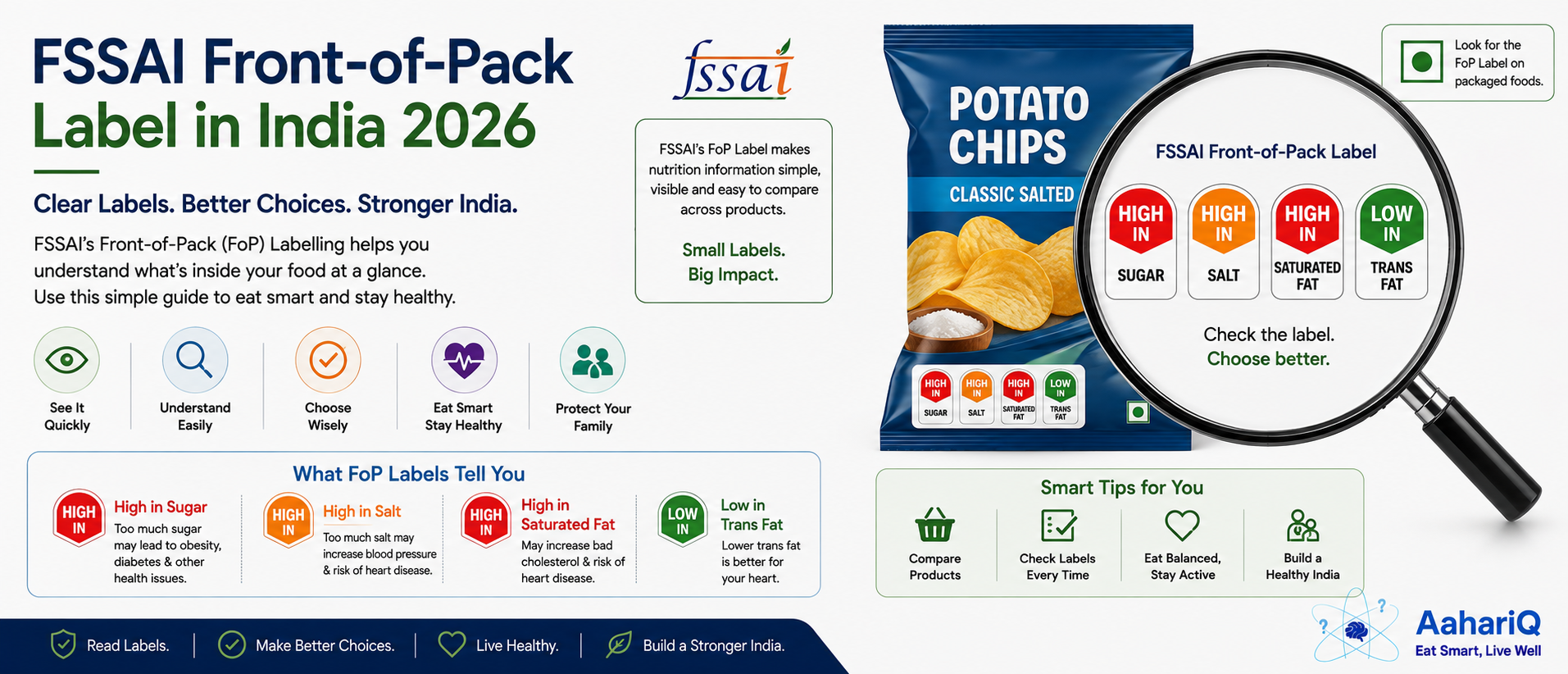 📋
📋FSSAI Front-of-Pack Warning Labels: What's Coming in 2026
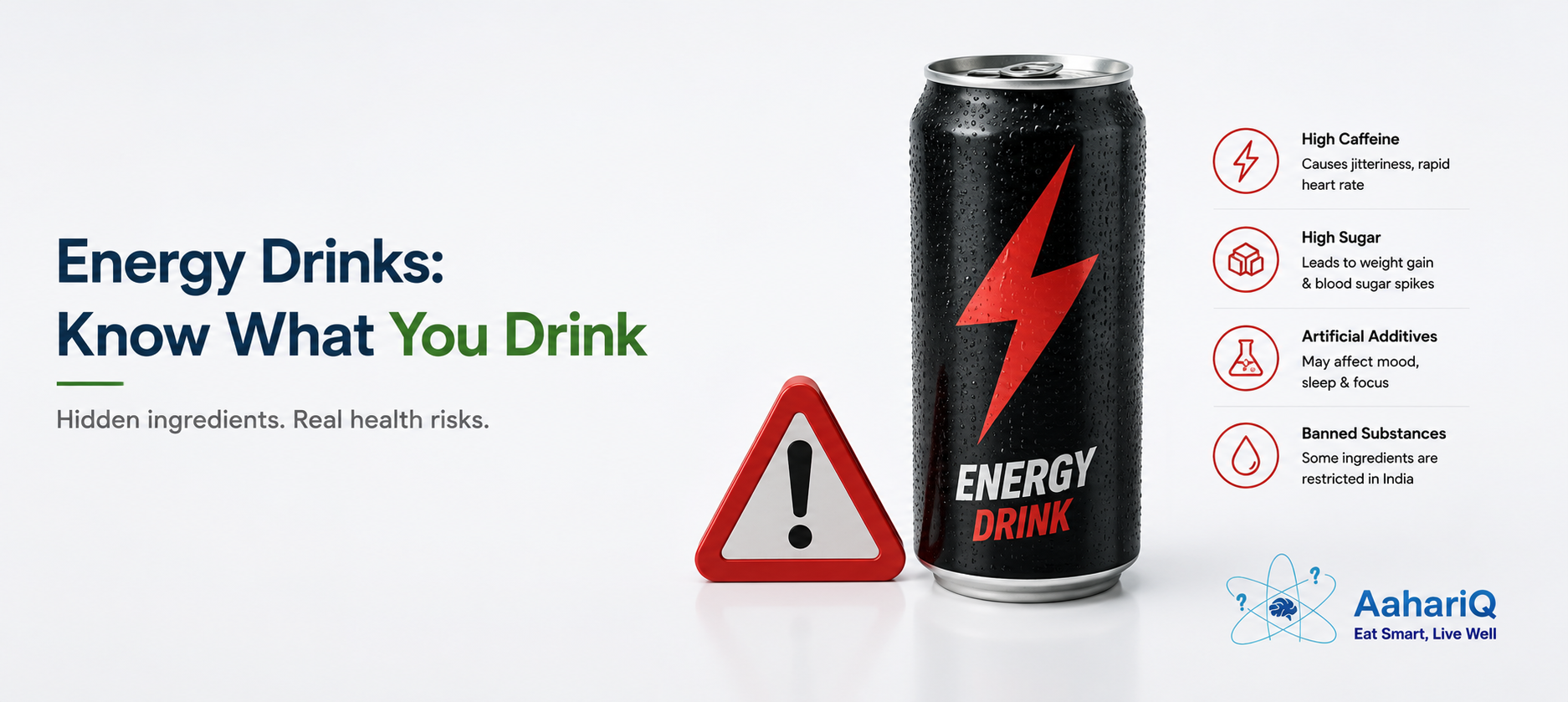 ⚡
⚡Are Energy Drinks Safe? Red Bull, Monster & Sting Reviewed
 👶
👶Packaged Food Marketed to Children India: The Hidden Harmful Ingredients Parents Must Know
 🏷️
🏷️