We use strictly necessary cookies to run AaharIQ, and optional functional/analytics cookies to improve it. You can accept all, reject non-essential ones, or . See our Cookie Policy for details.

How Packaged Food Affects Hormonal Health in India

20 million Indian women have PCOS. Endocrine disruptors from food packaging and phytoestrogens from soy-heavy processed food both play a role.
India's Hormonal Health Crisis: PCOS, Thyroid, and Metabolic Disruption
India faces a significant and growing hormonal health burden. Polycystic ovary syndrome (PCOS) is estimated to affect approximately 20% of Indian women of reproductive age — roughly 20 million women. India has one of the highest rates of thyroid disorders globally, with approximately 42 million people affected by thyroid disease, predominantly hypothyroidism. Declining sperm quality and male infertility — with Indian urban male sperm counts declining in studies over the past two decades — represent a parallel hormonal health concern. Precocious puberty (early puberty) in girls has also increased in urban Indian populations. Together, these trends suggest that environmental and dietary factors are increasingly disrupting India's endocrine health at a population level.
The most evidence-supported environmental contributors to this hormonal disruption: endocrine-disrupting chemicals (EDCs) in food packaging and agricultural chemicals, dietary hormones and phytoestrogens in food, and dietary patterns that drive insulin resistance (a key driver of PCOS and thyroid dysfunction). Packaged foods are a significant exposure route for all of these.
BPA in Food Packaging: India's Ongoing EDC Problem
Bisphenol A (BPA) is an industrial chemical used in the production of polycarbonate plastics and epoxy resins. BPA is found in the lining of metal food and beverage cans, polycarbonate water bottles (marked with recycling code 7), and certain food containers. BPA is an endocrine disruptor — it mimics oestrogen in the body, binding to oestrogen receptors and interfering with normal hormonal signalling.
Human evidence for BPA endocrine disruption: BPA exposure is associated with PCOS in multiple case-control studies — women with PCOS have significantly higher serum BPA levels than controls, and BPA activates the same androgen-excess pathways that characterise PCOS. BPA is associated with thyroid hormone interference (it competes with thyroid hormones for binding proteins). Male reproductive effects — testicular toxicity and sperm quality reduction — have been documented in animal studies and suggested in human epidemiology. Childhood BPA exposure is associated with early puberty in girls.
India has not banned BPA in food contact materials, unlike the EU (which restricted BPA in food contact plastics under Regulation (EU) 2018/213) and France (which banned BPA in all food contact materials in 2015). Packaged food sold in India, particularly canned goods (canned tomatoes, canned fish, canned beverages), may have BPA-lined cans. FSSAI's food contact material regulations have not specifically addressed BPA as of 2025 at the level that European regulators have.
Phthalates in Indian Packaged Food: The Invisible EDC
Phthalates are a family of plasticisers used to make PVC and other plastics flexible. They leach from food packaging — particularly PVC cling film, plastic food trays, and plastic bottles — into food, especially fatty foods (phthalates are lipophilic — they preferentially migrate into fat-containing foods). Phthalates are anti-androgenic EDCs, meaning they specifically disrupt male hormonal function by reducing testosterone synthesis. They are associated with reduced sperm count, abnormal sperm morphology, testicular toxicity, and early puberty in girls.
A 2022 study in the Indian Journal of Environmental Health estimated Indian adult exposure to phthalates and found measurable phthalate metabolites in urine samples from urban adults, with dietary exposure (food packaged in plastic) being the dominant route for most individuals. Foods with the highest phthalate contamination in research globally: foods with high fat contact time with plastic packaging (cheese, processed meats in plastic wrapping, packaged butter and ghee in plastic containers, oils in plastic bottles), and foods heated or stored in plastic containers.
Practical implications for Indian consumers: Prefer ghee and cooking oils packaged in glass or metal rather than plastic bottles. Avoid storing oily or fatty foods in soft plastic containers. Avoid heating food in plastic containers or on plastic film. Transfer packaged meats and cheeses from plastic wrapping to glass or stainless steel as soon as possible after purchase.
Soy and Phytoestrogens: Separating Fact from Fear
Soy contains isoflavones — phytoestrogens (plant compounds with oestrogen-like biological activity). Soy-based ingredients (soy protein, soy oil, soy lecithin, textured soy protein) are widely used in Indian packaged foods — from protein supplements and meat substitutes to biscuits (soy lecithin as emulsifier) and salad dressings. The health implications of soy isoflavone exposure are complex and often misunderstood in popular media. The scientific evidence on soy and hormonal health:
Soy consumption at normal dietary levels (1–2 servings/day) does NOT reduce testosterone or affect male reproductive hormones in clinical trials in healthy adult males. Fears that 'soy protein in protein powder lowers testosterone' are not supported by current clinical evidence.
Soy consumption is NOT associated with adverse female hormonal outcomes at normal dietary intakes. In fact, epidemiological evidence from Japan (where traditional soy consumption is high) shows LOWER rates of breast cancer and menopausal symptoms, not higher.
Very high soy isoflavone intake
equivalent to consuming very large quantities of tofu or soy milk multiple times daily — may have weak oestrogenic effects in vulnerable individuals (particularly those with thyroid disease, as soy may interfere with thyroid hormone synthesis).
Infant soy formula remains a valid debate
some studies suggest very high isoflavone exposure in exclusively soy-formula-fed infants may have developmental implications, though evidence is mixed.
The practical guidance: Normal packaged food consumption that includes soy (soy lecithin in biscuits, occasional soy protein in processed foods) is not an endocrine concern. Very high soy protein supplement intake (multiple scoops of soy protein powder daily) for athletic purposes is not proven harmful but should perhaps be varied with other protein sources for precautionary reasons.
Insulin Resistance, PCOS, and the Packaged Food Connection
The most impactful dietary connection between packaged food and PCOS is not through EDCs or phytoestrogens but through insulin resistance. Approximately 70% of Indian women with PCOS have insulin resistance — a state where cells respond inadequately to insulin signals, prompting the pancreas to produce more insulin. Chronically elevated insulin stimulates ovarian theca cells to produce excess androgens (male hormones), creating the hormonal imbalance that drives PCOS symptoms: irregular periods, anovulation, hyperandrogenism (acne, hirsutism), and metabolic dysfunction.
Ultra-processed Indian packaged foods — high in refined maida, added sugar, and low in fibre — are among the most potent drivers of insulin resistance available in the Indian food environment. For women with PCOS or at risk of it (particularly South Asian women with family history of PCOS, T2DM, or metabolic syndrome), reducing ultra-processed food consumption is not just general health advice — it is a direct treatment intervention for the underlying mechanism of their condition.
Clinical trials of low-glycaemic index dietary interventions in PCOS have consistently shown improvements in insulin sensitivity, hormonal profiles, menstrual regularity, and fertility outcomes. The Mediterranean diet pattern has shown benefit in PCOS. Reducing packaged refined carbohydrate consumption (biscuits, noodles, white bread, sweet packaged beverages) and increasing fibre, protein, and healthy fat intake from whole foods is the core of evidence-based dietary PCOS management.
AaharIQ Hormonal Health Guide: Practical Packaged Food Choices
For Indian women with PCOS or hormonal concerns, and for anyone seeking to minimise endocrine disruptor exposure from packaged foods, AaharIQ provides the following practical guidance:
Packaging choices to reduce EDC exposure: Choose glass jar over canned goods (reduces BPA exposure). Choose glass or metal packaged oils and ghee over plastic bottle. Avoid heating food in any plastic packaging. Check plastic code on containers — avoid code 3 (PVC, contains phthalates) and code 7 (may contain BPA). Packaged food choices for PCOS: Avoid high glycaemic index packaged foods: refined maida biscuits, sweet drinks, instant noodles, white bread. Choose whole grain packaged options with fibre >3g per serving. Look for low sugar in packaged beverages — under 5g per 100ml. Plain oats, plain whole grain cereals without added sugar, packaged nuts, and plain dahi are PCOS-friendly packaged options. Soy in context: Soy lecithin in biscuits is not a hormonal concern. Moderate packaged soy protein supplement use is unlikely to be harmful. Very high-dose soy isoflavone supplements should be discussed with a physician, particularly for women with thyroid conditions. Use AaharIQ's Hormonal Health scan mode: Flags plasticiser-associated packaging types, soy content, refined carbohydrate and sugar load, and provides an overall hormonal health rating for packaged products based on the above factors.
A summary of the endocrine-related concerns covered in this article:
| Source | Common Packaging/Ingredient | Hormonal Concern |
|---|---|---|
| BPA | Metal can linings, polycarbonate bottles (recycling code 7) | Mimics oestrogen; linked to higher serum levels in PCOS and thyroid hormone interference |
| Phthalates | PVC cling film, plastic trays and bottles, especially with fatty foods | Anti-androgenic - associated with reduced sperm count and early puberty in girls |
| Soy isoflavones | Soy protein, soy lecithin, textured soy protein | Phytoestrogen - normal dietary intake not shown to be harmful; very high intake may affect thyroid hormone synthesis |
| Refined carbs and added sugar | Biscuits, noodles, sweet packaged beverages | Drives insulin resistance, present in about 70% of Indian women with PCOS, which raises ovarian androgen production |
References
- [1]Kandaraki E et al. (2011). Endocrine disruptors and polycystic ovary syndrome (PCOS): elevated serum levels of bisphenol A in women with PCOS. Journal of Clinical Endocrinology & Metabolism.
- [2]Duckworth RA et al. (2021). Phthalates and DEHP exposure from food in India — dietary assessment. Environmental Research.
- [3]Unfer V et al. (2017). Effects of inositols in women with PCOS: a systematic review of randomised controlled trials. International Journal of Endocrinology.
Frequently Asked Questions
BPA in canned foods and plastic-packaged products, phthalates leaching from PVC packaging, soy isoflavones in soy-heavy protein bars, and excess refined sugar (raises insulin and androgens in PCOS). Use glass or stainless containers, avoid microwaving in plastic, and prefer low-soy packaged foods for hormonal conditions.
Without AaharIQ — you're scanning labels with your naked eye, missing hidden additives, E-numbers, and FSSAI violations that could silently harm your health over time.
🔍 Scan your food to check for PCOS diet India packaged food instantly
India's free AI food scanner. Detect harmful additives, FSSAI violations & allergens in any packaged food. Get a BUY or AVOID verdict in seconds.
Free tools related to this article
Author
Tags
Related Articles
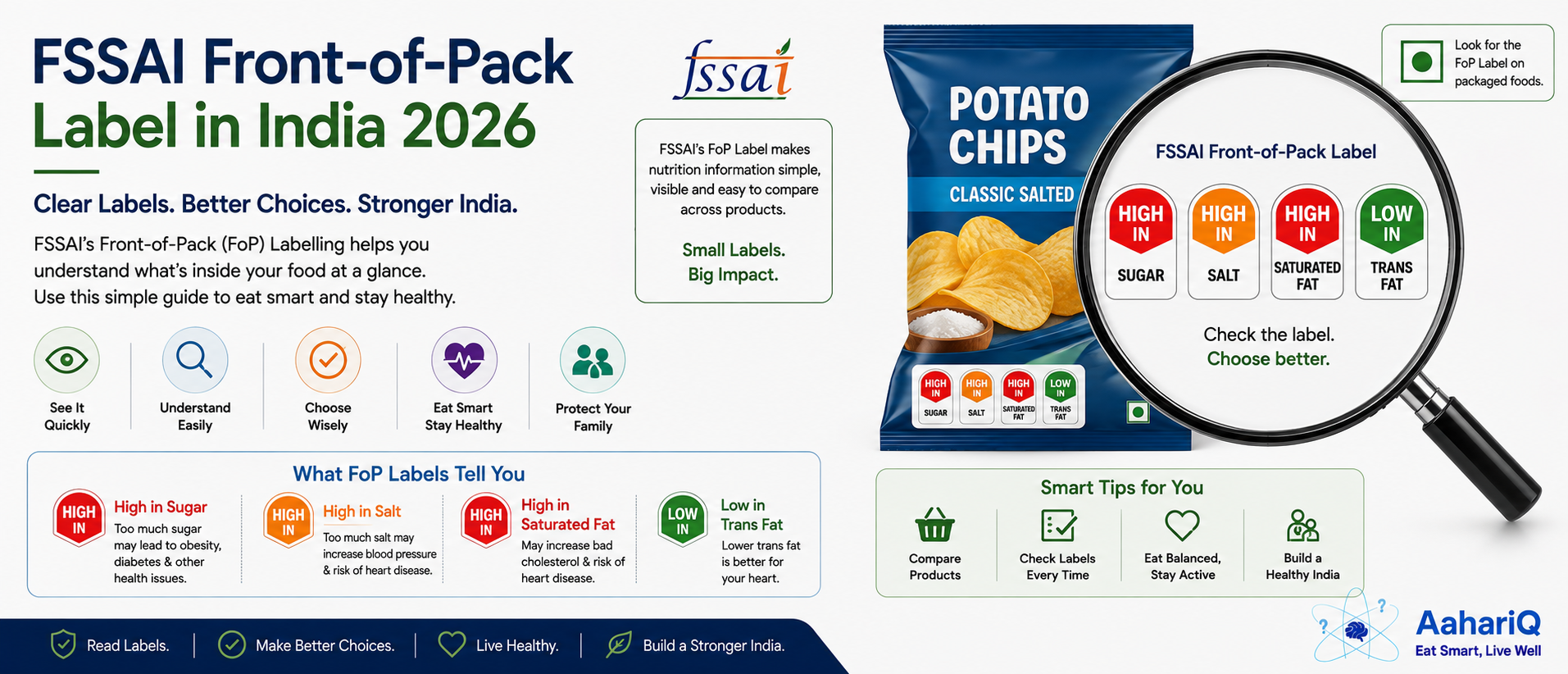 📋
📋FSSAI Front-of-Pack Warning Labels: What's Coming in 2026
 ⬡
⬡How AI Is Transforming Food Safety for People with Chronic Conditions
 🏷️
🏷️"Multigrain", "Natural", "No Added Sugar" — Misleading Health Claims on Indian Packaged Food
 🏛️
🏛️