We use strictly necessary cookies to run AaharIQ, and optional functional/analytics cookies to improve it. You can accept all, reject non-essential ones, or . See our Cookie Policy for details.

Are Energy Drinks Safe? Red Bull, Monster & Sting Reviewed
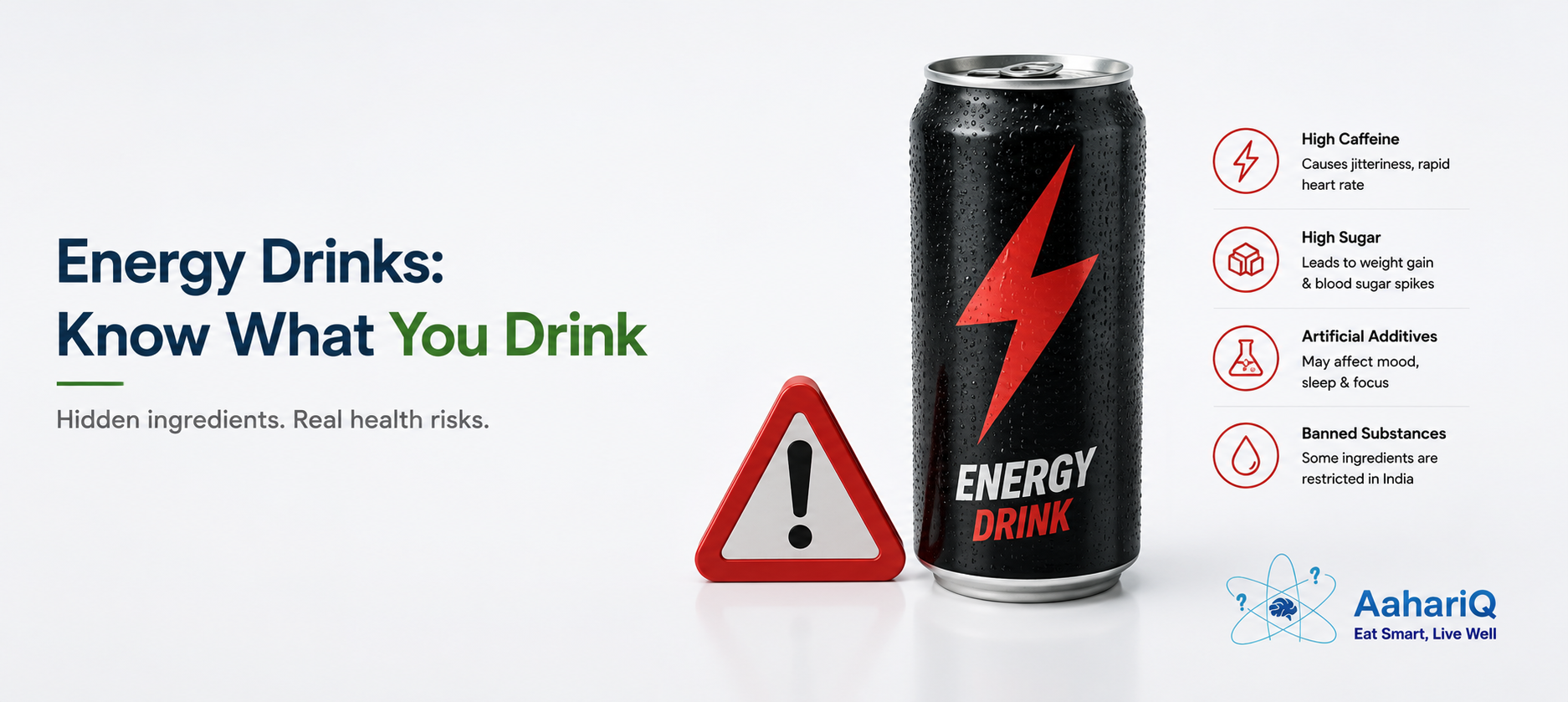
Red Bull, Monster and Sting decoded: caffeine, sugar, taurine and artificial colour levels — and the real health risks for Indian consumers in 2026.
Energy Drinks India 2026: Are Red Bull, Monster & Sting Actually Harmful?
India's energy drink market is growing at over 20% annually. Red Bull, Monster, Sting (PepsiCo), Cloud 9, and dozens of local brands line the shelves of every petrol pump, gym, and kirana store. The primary market: young Indians aged 18–35 and increasingly teenagers.
Here is what they are actually consuming.
Caffeine
All energy drinks contain high levels of caffeine. Comparison:
Drink
Caffeine per 250ml
40–70mg
The concern is not one can. It's:
Multiple cans per day (common among students and gym-goers)
Mixing with alcohol ("vodka Red Bull") — which masks alcohol's sedative effects, leading to greater alcohol consumption
Consuming on an empty stomach — caffeine absorption is faster, risk of palpitations higher
Consumption by children and teenagers — for whom caffeine has no safe level per WHO
FSSAI limit: Caffeine in energy drinks is limited to 320 ppm (mg/kg) under FSSAI regulations. At 250ml, this allows approximately 80mg — exactly what Red Bull contains. The regulation has essentially been written to allow existing products rather than restrict based on health evidence.
Taurine
Red Bull contains 1,000mg of taurine per 250ml. Taurine is a naturally occurring amino acid. At these doses, it is generally safe for healthy adults. However, its interaction with caffeine is under-researched, and some studies show combined caffeine + taurine causes greater cardiovascular stress than caffeine alone.
Sugar
A 250ml can of Sting contains 34.5g of sugar — nearly 9 teaspoons. Red Bull (regular) contains 27.5g per 250ml. These are among the highest sugar density drinks available in India.
Sugar-free variants substitute with sucralose and acesulfame-K — which carry their own gut microbiome concerns (see our gut health article).
Artificial Colours
Monster Energy contains tartrazine (E102) and other artificial colours linked to hyperactivity in children. Sting contains caramel colour (E150d) — a class 4 caramel colour that contains 4-methylimidazole, a possible carcinogen per California's Prop 65 standards.
B Vitamins at Megadose Levels
Red Bull contains B3 (Niacin) at 22mg per 250ml — 100% of daily recommended intake in a single drink. This sounds positive but consuming multiple energy drinks per day means megadose B vitamin intake that can cause niacin flush (intense skin reddening and itching).
Health Risks Documented from Energy Drink Consumption
Cardiovascular effects: Multiple case reports and studies link heavy energy drink consumption to:
Cardiac arrest in people with underlying conditions
In India specifically: Several Indian hospitals have reported cases of young men presenting with palpitations, hypertension, and cardiac events following heavy energy drink consumption (often mixed with alcohol).
Mental health: Regular high-caffeine consumption increases anxiety, disrupts sleep architecture, and can trigger panic attacks in predisposed individuals.
Adolescents: WHO and the American Academy of Pediatrics both recommend zero energy drink consumption for people under 18. In India, there is no age restriction on purchasing energy drinks.
Scan Your Energy Drink
→ Download AaharIQ Free — Check Your Energy Drink
AaharIQ scans any energy drink barcode and shows you the full caffeine content, sugar load, artificial colour risk, and your cumulative daily caffeine from all scanned products.
References
- [1]AaharIQ Research Team (2026). Energy Drinks India: Are Red Bull, Monster & Sting Harmful? Ingredients & Health Risks 2026. AaharIQ Health Reports.
Frequently Asked Questions
One can per day is within FSSAI's caffeine limits for healthy adults. However, daily consumption builds caffeine dependency, and withdrawal causes headaches and fatigue. People with heart conditions, hypertension, anxiety disorders, or pregnancy should avoid entirely.
Without AaharIQ — you're scanning labels with your naked eye, missing hidden additives, E-numbers, and FSSAI violations that could silently harm your health over time.
🔍 Scan your food to check for Energy Drinks instantly
India's free AI food scanner. Detect harmful additives, FSSAI violations & allergens in any packaged food. Get a BUY or AVOID verdict in seconds.
Free tools related to this article
Author
Tags
Related Articles
Should I Buy Lays Chips? Health Risk Analysis of India's Most Popular Snack
 ◉
◉Voice-First Health: The Research Behind Conversational Medical AI
 ✦
✦The Inflammation-Diet Connection: Ingredients That Drive Silent Disease
 ◆
◆Artificial Sweeteners and Health: A Deep Dive with AI Analysis
 ❋
❋