We use strictly necessary cookies to run AaharIQ, and optional functional/analytics cookies to improve it. You can accept all, reject non-essential ones, or . See our Cookie Policy for details.

Which Indian Breakfasts Are Actually Healthy?

Chai and biscuits provide almost no protein and spike blood sugar. Here's the real glycaemic index and protein comparison across common Indian breakfasts.
Why This Matters
Breakfast is one of the few meals where small, easy changes produce outsized effects on blood sugar stability for the rest of the day — not because breakfast is mystically "the most important meal," but because what you eat first thing sets the glycaemic and hunger trajectory for hours afterward. India's most common urban breakfast pattern — sugary chai with biscuits, or white bread and butter — happens to be close to the worst possible combination for that trajectory: high glycaemic load, essentially no protein, and no fibre to slow any of it down. Meanwhile, several of India's most traditional breakfast foods — idli, dosa, moong dal chilla — turn out to have real, mechanism-backed metabolic advantages that most people eating them daily aren't aware of. This guide covers the real evidence behind both the good and bad ends of that spectrum.
Indian Breakfast Options: Complete Nutritional Rating
| Breakfast Option | Protein (g) | GI | Fibre (g) | Overall Rating | Notes |
|---|---|---|---|---|---|
| 2 moong dal chilla + coriander chutney | 16–18g | Low (GI ~35) | 6g | ✅ Excellent | Best Indian breakfast — high protein, low GI, fibre-rich, fermented; add 1 cup dahi to push protein to 26g |
| Idli (3) + sambar + chutney | 8–10g | Medium-low (GI ~40, fermentation lowers GI) | 3g | ✅ Good | Fermentation increases bioavailability; sambar adds protein + vegetables; better than most Western breakfasts |
| Dosa (2 plain) + sambar + chutney | 7–9g | Medium (GI ~50–55) | 2g | ✅ Good | Fermented; add sambar generously for protein; egg dosa = 20g protein — excellent |
| Poha (plain) + chai | 4–5g | Medium-high (GI ~55–65) | 2g | ⚠️ Moderate | Low protein is the main issue; add peanuts + moong sprouts + dahi on side to upgrade protein to 12–15g |
| Upma (semolina/rava) | 4–5g | Medium-high (GI ~65) | 2g | ⚠️ Moderate | Very low protein despite seeming filling; add vegetables and serve with dahi; rava has no significant nutritional advantage over wheat |
| Paratha (1 plain butter) + achaar | 5–6g | Medium-high (GI ~65) | 3g | ⚠️ Moderate | Stuffed paratha (moong/paneer/methi) is significantly better; plain maida paratha with butter = nutritionally poor despite cultural prevalence |
| White bread (2 slices) + butter + chai | 5–6g | High (GI ~75) | 1g | ❌ Poor | Low protein, high GI, negligible fibre; most common urban Indian breakfast; worst metabolic choice for diabetics |
| Oats porridge + nuts + banana | 8–10g | Low-medium (GI ~40–50) | 5–6g | ✅ Excellent | Highest fibre breakfast option; beta-glucan for cholesterol reduction; add eggs or dahi for protein boost |
| Eggs (2, any style) + 1 whole wheat roti | 18–20g | Medium (roti GI ~60) | 3g | ✅ Excellent | Highest protein breakfast with complete amino acids; adds satiety for 4–5 hours; reduces lunch overeating |
| THE BIGGEST INDIAN BREAKFAST MISTAKE: Drinking chai with sugar (50–80 calories of pure sucrose) as your primary "breakfast" with biscuits. This combination provides: virtually zero protein (0–3g), high sugar (raises blood glucose and insulin immediately), zero fibre, and leaves you hungry within 90 minutes. The result is mid-morning snacking on more biscuits or namkeen. Replacing this pattern with even a basic moong dal chilla (15 minutes to make) transforms blood glucose control, reduces total daily caloric intake by 200–400 calories, and dramatically improves afternoon energy. | |||||
| --- |
Why Fermentation Actually Lowers Glycaemic Index
Idli and dosa batter fermentation isn't just a flavour and texture tradition — it measurably changes the food's metabolic impact. During fermentation, bacteria and yeast in the batter consume readily available starches and convert them into organic acids (primarily lactic and acetic acid), and these acids physically slow gastric emptying and partially inhibit the digestive enzymes that break starch down into glucose. The combined effect can lower glycaemic index by up to 30% compared to an equivalent unfermented batter — a real, mechanism-backed reduction, not a marketing claim. There's a second, less well-known lever available for idli specifically: eating it freshly hot maximises glycaemic impact, while cooling or refrigerating idli after cooking and eating it later converts some of the starch into resistant starch — starch that behaves more like fibre than rapidly digestible carbohydrate, further lowering the glycaemic response. A cooled idli genuinely digests differently from a hot one, which is a useful, free adjustment for anyone managing blood sugar.
The Real Cost of Skipping Breakfast
Skipping breakfast entirely — increasingly common among time-pressed urban Indians — isn't a metabolically neutral choice. Randomized studies show that skipping breakfast produces a significantly higher glycaemic response after the next meal (typically lunch) compared to eating an identical lunch after a normal breakfast — the body handles the same food worse when it arrives after a long fast, an effect sometimes called the "second-meal phenomenon." Longitudinal cohort research has found breakfast skipping positively associated with incident type 2 diabetes, and systematic reviews link it to higher rates of metabolic syndrome and its components — abdominal obesity, hypertension, and dyslipidaemia among them. None of this means breakfast is mandatory for every person and every eating pattern (structured intermittent fasting is a different, deliberate approach with its own separate evidence base) — but unplanned, habitual breakfast-skipping followed by ordinary eating the rest of the day is the pattern the research actually flags as worse for metabolic health, not breakfast-skipping in general.
Why Protein at Breakfast Matters More Than Most Realise
Protein at breakfast does two things most Indian breakfast staples don't: it slows gastric emptying (extending satiety for hours rather than the roughly 90-minute window a carb-only breakfast provides), and it blunts the glucose spike from any carbohydrates eaten alongside it by slowing their absorption. This is exactly why a moong dal chilla or an egg-and-roti breakfast keeps hunger and energy stable through mid-morning in a way that poha or plain paratha doesn't, independent of calorie count. The practical target worth aiming for is roughly 15-20g of protein at breakfast — achievable through dal-based dishes, eggs, dahi, or paneer, and comfortably clear of what most traditional carb-forward breakfasts provide on their own without an add-on.
Fixing India's Most Common Breakfast Mistake
Sugary chai with biscuits, eaten as the primary breakfast rather than a small accompaniment, combines nearly everything that works against stable blood sugar: 50-80 calories of essentially pure sucrose from the sugar in the chai, virtually no protein, no fibre, and a rapid glucose spike followed by an equally rapid crash. That crash is precisely what drives the mid-morning biscuit or namkeen craving that follows roughly 90 minutes later — not a willpower failure, but a predictable physiological response to an unstable breakfast. Swapping this pattern for something as simple as a moong dal chilla, which takes about 15 minutes to prepare, doesn't just improve the breakfast itself — it tends to reduce total daily calorie intake by an estimated 200-400 calories, simply by removing the mid-morning snacking that an unstable breakfast reliably triggers.
Building a Better Version of Your Usual Breakfast
The most sustainable fix usually isn't replacing a beloved breakfast dish entirely — it's upgrading it. Poha and upma, both moderate-to-poor on protein and fibre alone, become meaningfully better with peanuts, moong sprouts, and a side of dahi stirred in or served alongside, pushing protein from roughly 4-5g up toward 12-15g without changing the dish's character. Plain paratha with butter is a notably weaker choice than a stuffed version — moong, paneer, or methi paratha carries real protein and fibre that a plain-maida-and-butter paratha doesn't. Dosa, similarly, goes from a good-but-carb-heavy option to an excellent one with a generous serving of sambar or the addition of egg. In each case, the traditional dish stays intact — the fix is what accompanies it, which is a far easier habit change than abandoning foods people have eaten their whole lives.
A Realistic Weekly Rotation
A practical, non-repetitive week that stays within the "excellent" and "good" categories: moong dal chilla with dahi (Monday), eggs with a whole wheat roti (Tuesday), idli-sambar with extra dal on the side (Wednesday), oats porridge with nuts and banana (Thursday), dosa with generous sambar or an egg dosa (Friday), upgraded poha with peanuts and sprouts (Saturday), and a stuffed paneer or moong paratha with dahi on a slower weekend morning (Sunday). None of this requires unfamiliar ingredients or a dramatic departure from typical Indian breakfast traditions — it's the same food family, sequenced and slightly upgraded to consistently clear the roughly 15g protein and low-to-moderate glycaemic index threshold that makes the biggest measurable difference to how the rest of the day's eating and energy actually goes.
Diabetics and Prediabetics: What Changes
For anyone managing diabetes or prediabetes specifically, breakfast choice carries more weight than for the general population, since morning insulin sensitivity patterns and the second-meal effect described above compound across a full day of eating. Prioritising the "excellent" category consistently -- moong dal chilla, eggs with roti, oats with nuts -- rather than occasionally is worth treating as a default rather than an aspiration for this group. Pairing any carbohydrate-containing breakfast with protein and, where practical, a short walk afterward, further blunts the post-meal glucose response -- a genuinely effective, free, evidence-backed addition on top of food choice alone. Testing post-breakfast glucose response to a few different breakfast options with a home glucometer is a practical way to see which specific version of a favourite dish -- idli eaten hot versus cooled, for instance -- actually performs best for a given individual, since responses do vary somewhat person to person.
What About Fruit and Smoothies?
Fruit-forward breakfasts and smoothies occupy a middle ground worth addressing directly, since they are often assumed healthy by default. Whole fruit eaten with its fibre intact -- a banana, an apple, a bowl of papaya -- digests considerably slower than the same fruit blended into a smoothie, where mechanical blending breaks down the fibre structure that would otherwise slow sugar absorption, meaning a fruit smoothie can produce a glycaemic response closer to fruit juice than to whole fruit despite containing the same ingredients. This does not make smoothies unhealthy outright, but a fruit-only smoothie as a full breakfast shares the same core weakness as poha or upma alone -- low protein, and a faster glucose rise than the ingredient list alone would suggest. Adding a protein source -- yoghurt, a scoop of protein powder, nuts -- to a smoothie meaningfully improves this profile, the same fix that works for poha and upma. Store-bought fruit juices compound this problem further, since they typically add sugar on top of already having no fibre, making them closer in metabolic effect to a soft drink than to the fruit they are named after despite the health-conscious marketing most juice brands use.
Frequently Asked Questions
Idli is a good breakfast choice for diabetics — better than white bread or plain poha. Fermentation lowers the GI by 10–15 points vs unfermented rice. Pair with sambar (protein, fibre) and avoid coconut chutney in excess. 2 idlis + sambar is an excellent diabetic breakfast.
Without AaharIQ — you're scanning labels with your naked eye, missing hidden additives, E-numbers, and FSSAI violations that could silently harm your health over time.
🔍 Scan your food to check for healthy indian breakfast instantly
India's free AI food scanner. Detect harmful additives, FSSAI violations & allergens in any packaged food. Get a BUY or AVOID verdict in seconds.
Free tools related to this article
Author
Tags
Related Articles
 ◇
◇Food Additives Decoded: The E-Numbers AI Knows to Watch
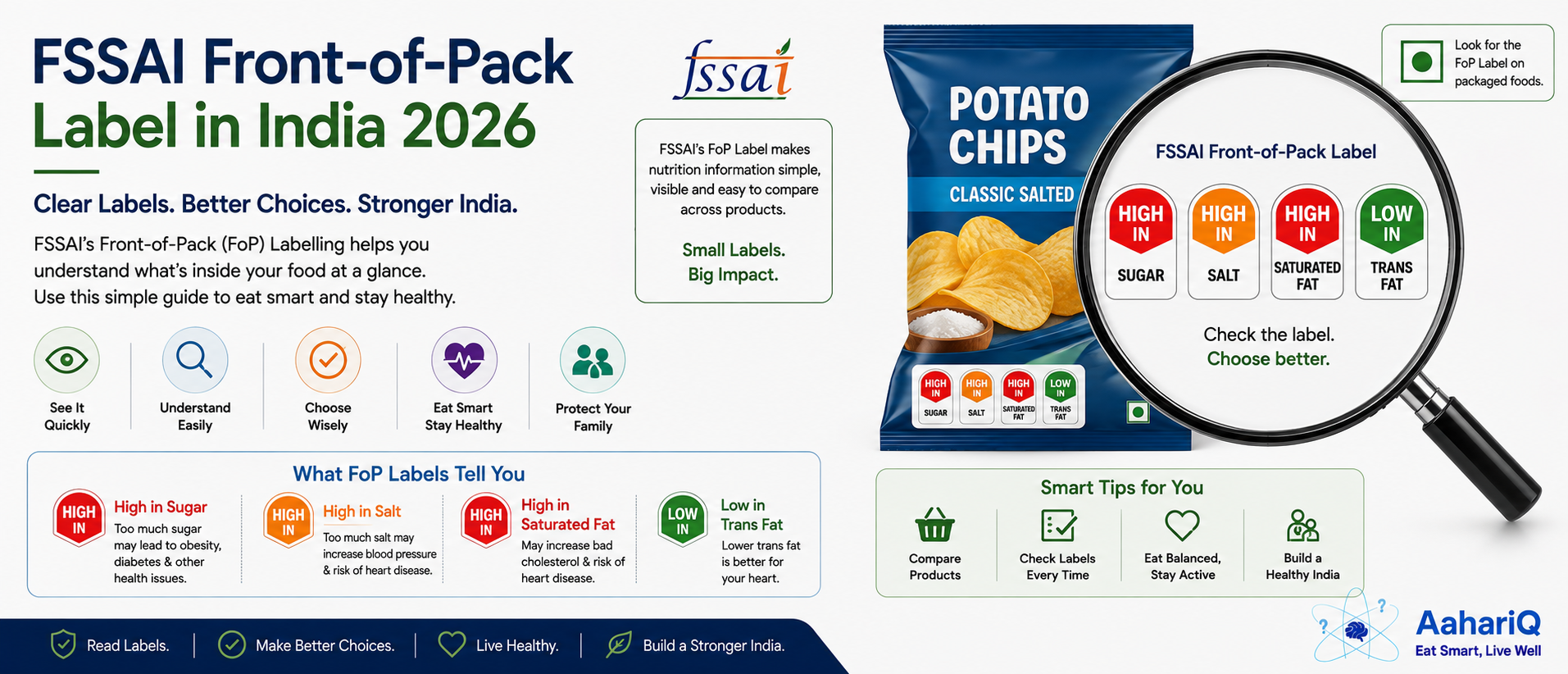 📋
📋FSSAI Front-of-Pack Warning Labels: What's Coming in 2026
 ◈
◈How Your Medical Documents Power Smarter, Personalised Health Decisions
 👶
👶