We use strictly necessary cookies to run AaharIQ, and optional functional/analytics cookies to improve it. You can accept all, reject non-essential ones, or . See our Cookie Policy for details.

A Full 7-Day Indian Diabetic Meal Plan, With the GI Math Shown
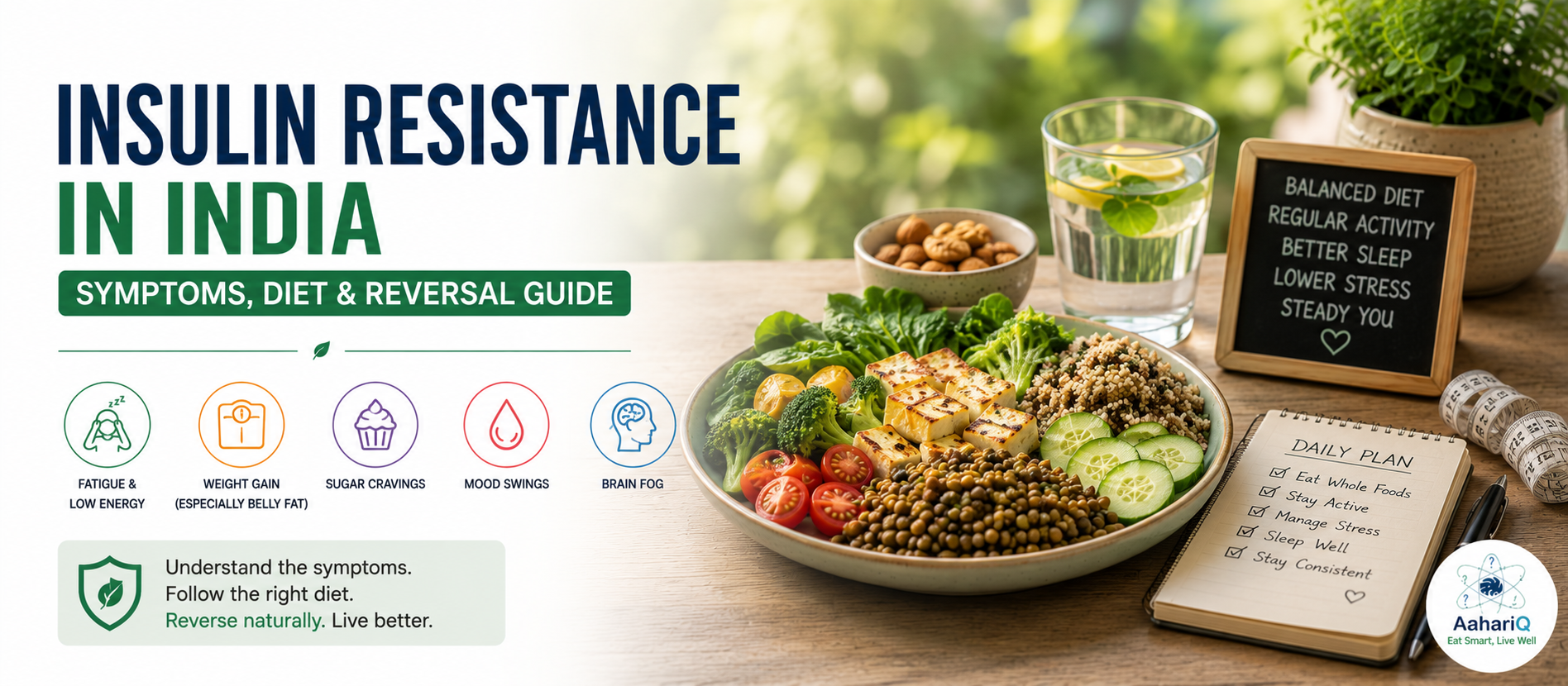
Every meal for a full week — carb count, GI rating, portion guide — plus why dal lowers the effective GI of rice, and which breakfasts secretly aren't healthy.
Why This Matters
Generic diabetic diet advice — "eat less rice, avoid sugar" — is technically correct but practically useless without specifics, since it doesn't tell someone how to actually structure a week of Indian meals around it. This plan is built around a few underlying principles worth understanding rather than memorising meal by meal: pairing refined carbohydrates with protein, fat, and fibre lowers a meal's effective glycemic response below what the rice or roti alone would produce; whole grains and millets (jowar, bajra, ragi) outperform refined wheat and white rice on glycemic impact while remaining culturally familiar; and consistent meal timing and portion size matters as much as food choice for stable blood sugar. Once these principles are understood, the specific week below becomes a template to adapt rather than a rigid script to follow exactly.
7-Day Indian Diabetic Meal Plan
| Day / Meal | Meal | Carbs (g) | Protein (g) | GI Rating |
|---|---|---|---|---|
| DAY 1 — Breakfast | Moong dal chilla (2) with mint chutney + 1 cup chai (no sugar, with low-fat milk) | 28g | 14g | ✅ Low GI ~35 |
| DAY 1 — Lunch | Jowar roti (2) + rajma curry (1 cup) + cucumber raita + small salad | 52g | 22g | ✅ Low-moderate GI ~42 |
| DAY 1 — Dinner | Brown rice (½ cup cooked) + moong dal (1 cup) + palak sabzi + dahi | 55g | 18g | ⚠️ Moderate GI ~50 — dal lowers effective GI of rice |
| DAY 1 — Snack | Roasted chana (30g) + 1 apple | 24g | 5g | ✅ Low GI ~36 |
| DAY 2 — Breakfast | Oats with dahi (1 cup each) + 1 tbsp ground flaxseed + 5 almonds | 34g | 12g | ✅ Low GI ~50 |
| DAY 2 — Lunch | Bajra roti (2) + chana dal (1 cup) + mixed vegetable sabzi | 48g | 20g | ✅ Low-moderate GI ~44 |
| DAY 2 — Dinner | Grilled chicken (100g) + jowar roti (1) + dal tadka + cucumber | 32g | 35g | ✅ Low GI — protein + whole grain |
| DAY 3 — Breakfast | Daliya (broken wheat) porridge with milk (1 cup) + ½ banana + walnuts (4 halves) | 40g | 10g | ⚠️ Moderate GI ~52 |
| DAY 3 — Lunch | Ragi roti (2) + masoor dal (1 cup) + methi sabzi + small tomato onion salad | 50g | 18g | ✅ Low-moderate GI ~45 |
| DAY 3 — Dinner | Fish curry (rohu 100g) + brown rice (½ cup) + drumstick sambar | 50g | 28g | ⚠️ Moderate GI ~52 |
| DAY 4 — Breakfast | Idli (2, small) + sambar (½ cup) + coconut chutney (1 tbsp) | 40g | 10g | ⚠️ Moderate GI ~58 — fermented; acceptable |
| DAY 4 — Lunch | Whole wheat roti (2) + soya chunk curry (1 cup) + lauki sabzi + dahi | 48g | 30g | ✅ Low-moderate GI ~44 |
| DAY 4 — Dinner | Khichdi (1 cup — equal parts rice+moong dal, cooked with turmeric+ghee) + papad + vegetable soup | 52g | 16g | ⚠️ Moderate GI ~52 — dal lowers rice GI substantially |
| DAY 5 — Breakfast | Paneer bhurji (100g paneer, 1 egg, vegetables) + 1 jowar roti | 18g | 28g | ✅ Low GI ~32 |
| DAY 5 — Lunch | Rajma rice (½ cup rice + 1 cup rajma) + onion cucumber salad + chaas (buttermilk) | 62g | 22g | ✅ Low-moderate GI ~40 — rajma dramatically lowers rice GI |
| DAY 5 — Dinner | Tofu stir-fry (150g tofu, mixed vegetables) + bajra roti (1) | 28g | 24g | ✅ Low GI ~38 |
| DAY 6 — Breakfast | Sprouted moong salad (1 cup) + 2 boiled eggs + 1 cup chai without sugar | 22g | 20g | ✅ Very low GI ~30 |
| DAY 6 — Lunch | Kadhi (low-fat dahi-based, 1 cup) + jowar roti (2) + mixed dal (½ cup) + baingan sabzi | 50g | 18g | ⚠️ Moderate GI ~48 |
| DAY 6 — Dinner | Chicken tikka (non-fried, grilled, 100g) + ragi roti (1) + green salad + dahi | 28g | 32g | ✅ Low GI ~36 |
| DAY 7 — Breakfast | Besan chilla (2, made with vegetables) + green chutney | 30g | 16g | ✅ Low GI ~28 — chickpea flour is very low GI |
| DAY 7 — Lunch | Chana masala (1 cup) + jowar roti (2) + raita + salad | 52g | 20g | ✅ Low GI ~38 — chana is lowest GI of all Indian carbohydrates |
| DAY 7 — Dinner | Palak paneer (100g paneer) + brown rice (½ cup) + dal + dahi | 52g | 24g | ⚠️ Moderate GI ~48 |
| The three most important dietary principles for Indian diabetics that this meal plan embodies: (1) Never eat carbohydrate without protein — pair rice with dal, roti with dal or paneer, fruit with nuts; (2) Replace refined grains (maida, white rice) with whole grain alternatives — jowar, bajra, ragi, brown rice, whole wheat; (3) Make legumes (dal, rajma, chana) the centre of every lunch and dinner — they are the lowest GI, highest fibre, highest protein carbohydrate available in the Indian kitchen. | ||||
| --- |
Why Dal Lowers the Effective GI of Rice
Several meals in this plan pair rice or a refined grain with dal specifically, and this isn't arbitrary — combining a high-GI carbohydrate with protein and soluble fibre from legumes measurably slows gastric emptying and glucose absorption, producing a lower overall glycemic response than the rice eaten alone would suggest based on its individual GI value. This is why the meal plan's notes repeatedly flag "dal lowers effective GI of rice" rather than treating each ingredient's GI in isolation — glycemic index values are measured for individual foods eaten alone, but real meals are combinations, and the combination effect matters more practically than any single ingredient's standalone number. This principle extends to any high-GI Indian staple: pairing white rice, poha, or idli with dal, curd, or a protein side consistently produces a gentler blood sugar response than eating the same starch alone.
Adapting This Plan for Common Dietary Constraints
For vegetarians already following this plan as written, most days already lean vegetarian or can be easily adjusted by substituting paneer, soya chunks, or additional dal for the occasional fish or chicken meal included for variety. For anyone managing both diabetes and hypertension simultaneously — a common combination given how frequently the two conditions co-occur in Indian patients — reducing the papad, pickle, and added salt in tempering across this plan addresses the sodium side without requiring a separate meal structure. For anyone with reduced kidney function, a common diabetes complication, the protein portions in this plan (particularly the higher-protein dinners) may need adjustment under medical guidance, since kidney-compromised patients often require modified protein targets that differ from the general diabetic protein recommendations this plan is built around.
How to Use GI Ratings Without Overcomplicating Every Meal
The GI ratings throughout this plan are meant as a general guide for building intuition over time, not a number to calculate before every bite indefinitely. After following a structure like this for several weeks, most people develop a working sense of which combinations run higher or lower without needing to reference exact figures — recognising that a rice-heavy meal needs a dal or protein pairing, that fermented foods like idli and dosa batter run moderate rather than low, and that fruit works better as a snack alongside nuts than on its own. Glucose monitoring, where available, is the more individually accurate feedback loop than any general GI table — GI values are population averages, and individual glycemic responses to the same food can vary meaningfully between people, making a personal glucose log after specific meals more informative than the general figures in this plan for fine-tuning an individual diet long-term.
Cooking Methods That Change the Numbers on This Plan
Beyond ingredient choice, how a dish is cooked meaningfully shifts its glycemic impact, which is worth applying across every meal in this plan rather than treating the listed GI values as fixed regardless of preparation. Al dente or slightly undercooked grains and legumes generally have a lower GI than the same food cooked very soft, since less-broken-down starch structures digest more slowly. Cooling cooked rice or potatoes before reheating increases resistant starch content, lowering their effective glycemic impact compared to eating them freshly cooked and hot — a genuine, evidence-supported effect worth knowing for anyone regularly eating leftover rice. And the amount and type of fat used in cooking also matters: a moderate amount of healthy fat (ghee, mustard oil) added to a meal slows gastric emptying similarly to the protein-pairing effect covered above, while deep-frying adds excess calories without meaningfully improving glycemic response the way protein or fibre pairing does.
Snack Options for Indian Diabetics
• Best snacks (GI <40): Roasted chana (30g) — GI 28; cucumber with hummus; 1 apple or 1 pear; 5 walnuts + 3 almonds; dahi (½ cup unsweetened) with berries; makhana (fox nuts, roasted, 30g) — GI 35
• Acceptable snacks (GI 40–55): 1 small banana (less ripe); 1 cup chaas (buttermilk, unsweetened); 1 jowar puffed cup; 1 hard-boiled egg; a small portion of homemade dhokla
• Avoid (GI >60): Biscuits and cookies; namkeen from packaged snacks; fruit juice (even "fresh"); poha (GI 74); sabudana namkeen; instant noodles; white bread toast; sweet chai with sugar
Frequently Asked Questions
Yes — with portion control and the right combination. White rice (GI 72–80) eaten with dal (GI 28–38) drops the combined meal GI to approximately 50–55. Key rules: limit rice to ½ cup cooked, always pair with protein (dal, curd, paneer), and add a vegetable sabzi to further slow glucose absorption.
Without AaharIQ — you're scanning labels with your naked eye, missing hidden additives, E-numbers, and FSSAI violations that could silently harm your health over time.
🔍 Scan your food to check for diabetic meal plan india instantly
India's free AI food scanner. Detect harmful additives, FSSAI violations & allergens in any packaged food. Get a BUY or AVOID verdict in seconds.
Free tools related to this article
Author
Tags
Related Articles
 🦋
🦋Thyroid Patients: Which Packaged Foods to Avoid?
 🔬
🔬Acrylamide in Indian Snacks 2026: Parle-G, Kurkure & Why FSSAI Has No Safety Limit
 ✦
✦The Inflammation-Diet Connection: Ingredients That Drive Silent Disease
 🧂
🧂Low Sodium Packaged Food India 2026 — Best Options for Hypertension & Heart Patients
 🧪
🧪