We use strictly necessary cookies to run AaharIQ, and optional functional/analytics cookies to improve it. You can accept all, reject non-essential ones, or . See our Cookie Policy for details.

Ozempic's Patent Just Expired in India. Prices Could Drop 90%
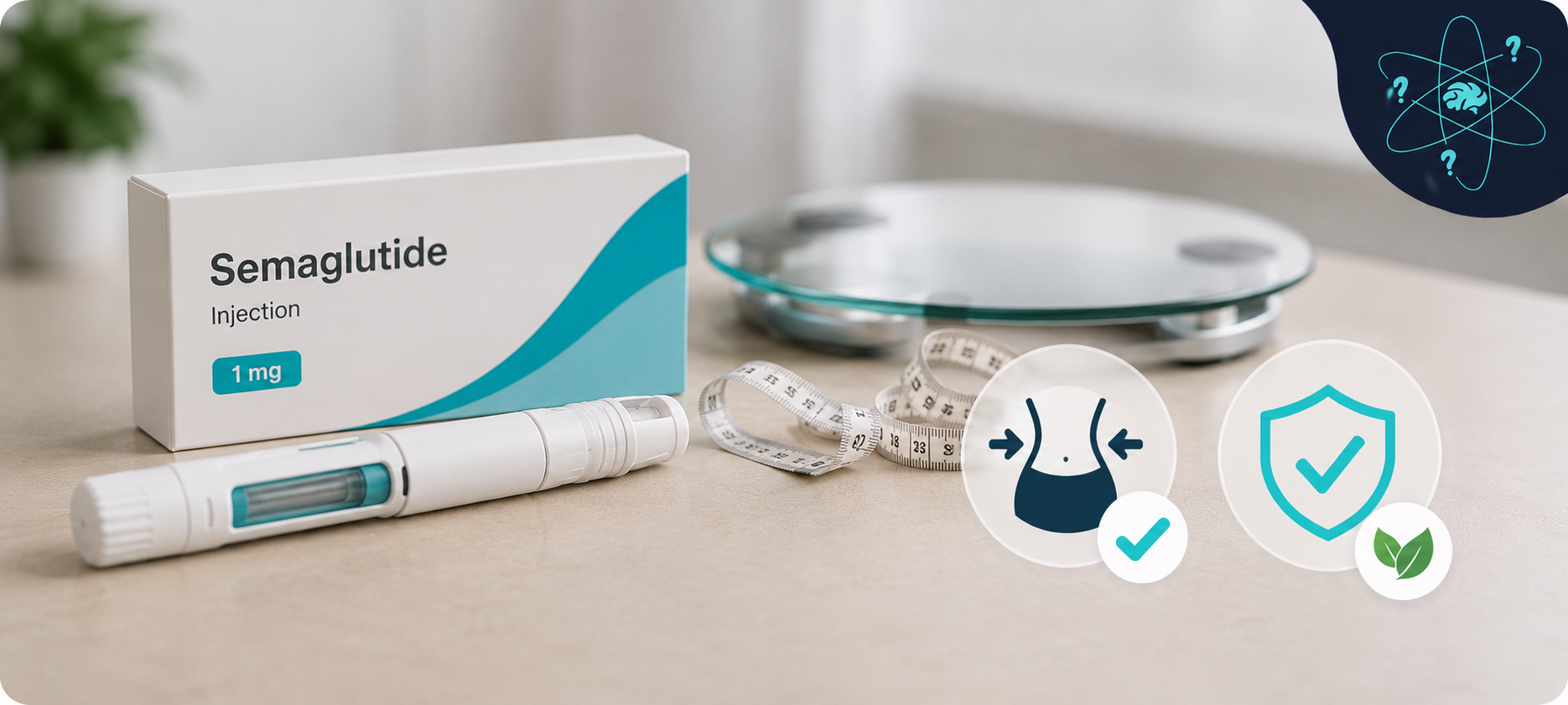
Semaglutide's patent expired in 2026. Generics could be 90% cheaper. CDSCO tightened surveillance. What's legal, what's fake — ask your doctor.
Introduction
On March 24, 2026, Novo Nordisk's patent on semaglutide — the active molecule in Ozempic and Wegovy, the GLP-1 receptor agonist drugs that have become the world's most talked-about pharmaceutical products — expired in India. This is not a minor pharmaceutical development. It means that Indian generic manufacturers can now legally produce semaglutide at a fraction of Novo Nordisk's branded price. Analysts have projected that generic semaglutide prices in India could fall by as much as 90% compared to current branded pricing — potentially putting within reach a drug that has demonstrated a 20% reduction in risk of major cardiovascular events and 15% average body weight reduction over 68 weeks in clinical trials.
But the patent expiry also introduces new risks: a market flooded with generic versions of varying quality, the possibility of counterfeit products that look like semaglutide but contain something else entirely, and a population of consumers who are making decisions about a potent prescription medication primarily from social media rather than medical consultation. Before the patent even expired, India's Central Drugs Standard Control Organisation (CDSCO) had already tightened surveillance — conducting inspections at 49 entities including drug wholesalers, retailers, and slimming clinics in response to unauthorised sale and use of weight-loss drugs.
This article explains what semaglutide actually is, what the clinical evidence supports, what CDSCO's role and approvals look like, what risks exist from counterfeit and improperly used products, and what questions to ask before considering any GLP-1 drug — based on the current regulatory and clinical landscape in India as of 2026.
What Is Semaglutide and Why Is Everyone Talking About It?
Semaglutide is a GLP-1 (glucagon-like peptide-1) receptor agonist — a class of drugs that mimic the action of GLP-1, a hormone naturally produced in the gut in response to food intake. GLP-1 does several things: it stimulates insulin release, suppresses glucagon (which would otherwise raise blood sugar), slows gastric emptying (so you feel full longer), and acts on brain centres to reduce appetite. In people with type 2 diabetes, this combination helps lower blood glucose. In everyone — diabetic or not — it reduces appetite and food intake significantly, which is why it produces weight loss.
In India, CDSCO approved Ozempic (semaglutide 0.5mg and 1mg, injectable, once-weekly) for adults with type 2 diabetes mellitus. The approval was for the diabetes indication, not for weight loss as a standalone treatment. Wegovy (semaglutide 2.4mg, injectable, once-weekly, specifically indicated for obesity management) has not, as of the most recent regulatory information, received separate CDSCO approval in India for the obesity/weight-loss indication — though this situation may evolve as the clinical evidence base and generic market develop. Indian doctors may prescribe semaglutide for weight loss as an off-label use in appropriate patients under their clinical judgment.
The cardiovascular evidence is compelling: the SUSTAIN-6 trial demonstrated a 26% reduction in major adverse cardiovascular events with semaglutide 0.5mg/1mg. The SELECT trial showed a 20% reduction in cardiovascular events in overweight or obese adults without diabetes. This is why Stat News described the patent expiry in India as significant not just for weight loss but for cardiovascular disease prevention — India's number one cause of mortality — if semaglutide becomes broadly accessible.
CDSCO's Crackdown on Unauthorised Weight-Loss Drug Sales
Even before the patent expiry, CDSCO moved to tighten surveillance after a surge in unauthorised sale and use of semaglutide and other GLP-1 drugs through slimming clinics, online pharmacies, and informal channels — fuelled by social media coverage of Ozempic's weight-loss effects. CDSCO conducted inspections at 49 entities across India, including drug wholesalers, retail pharmacies, and weight-loss clinics, in a crackdown on sales that occurred outside appropriate prescription and monitoring frameworks.
The regulatory concern is specific: semaglutide is not an over-the-counter product. It is a prescription drug requiring physician evaluation, monitoring for side effects (which include nausea, vomiting, pancreatitis risk, and contraindications for people with certain thyroid conditions or family history of thyroid cancer), and regular follow-up. The slimming clinic and informal market model — where people receive injections without proper medical history review, dosing protocols, or follow-up — creates real patient safety risks from a drug that, used appropriately, has an excellent evidence base, but used inappropriately can cause serious adverse events.
The Global Counterfeit Semaglutide Problem — And Why India Must Watch
Globally, counterfeit and adulterated semaglutide products have become a significant safety concern. The WHO has warned that fake Ozempic pens have been identified in circulation in Europe and the Americas — some containing "compounded mixtures of unknown drugs that do not contain semaglutide," others containing drugs with high levels of impurities, and some containing entirely unsafe or unapproved substances. The FBI issued a safety warning about counterfeit semaglutide in the US market. British regulators warned of fake Ozempic pens linked to hospitalisations.
With the patent expiry in India creating immediate demand for cheaper alternatives, and the regulatory environment for online pharmaceutical sales still developing, the risk of counterfeit semaglutide products entering the Indian market is material. A counterfeit product that looks like semaglutide but contains a different drug, an incorrect dose, or dangerous impurities is a particularly serious risk for a drug administered by self-injection — errors in dosing or substitution with an unknown substance can cause severe adverse events including hypoglycaemia, hospitalisation, or worse.
The Indian regulatory response should involve strict authentication requirements for generic semaglutide products, serialisation and track-and-trace systems for supply chain integrity, and aggressive enforcement against informal or online sales channels that bypass prescription requirements. Whether this response will scale at the pace of the post-patent-expiry demand surge is the key question facing CDSCO and state drug regulators over the next 12–24 months.
What Generic Semaglutide in India Could Look Like — And What to Watch For
Multiple Indian pharmaceutical companies are expected to launch generic semaglutide products following the patent expiry. These generic versions must receive CDSCO approval, demonstrate bioequivalence to the reference product, and meet manufacturing quality standards under Schedule M of India's drug regulations. A CDSCO-approved generic semaglutide from a licensed Indian pharmaceutical manufacturer is a legitimate product — not a counterfeit.
The risk is not from legitimate CDSCO-approved generics — it is from products that enter the market without proper CDSCO approval, through informal channels, claiming to be semaglutide but without the quality assurance that comes with formal approval. How to distinguish them: look for the manufacturing licence number and CDSCO approval number on the packaging; purchase only from licensed pharmacies, not from online platforms that do not verify prescription requirements or informal slimming clinic channels; and if a price seems implausibly low even for a generic, treat that as a warning sign rather than a bargain.
The Weight Loss Drug Social Media Problem in India
Semaglutide's weight-loss effects have generated enormous social media coverage globally, and India is no exception. Instagram and YouTube in India have seen a surge in influencer content about "Ozempic face" (the facial appearance change from rapid weight loss), "Ozempic before and after" transformations, and discussions about where to obtain semaglutide in India. Some of this content is informative and health-conscious. Much of it omits the medical consultation requirement, the importance of dosing protocols, the side effect profile, and the rebound weight gain that typically occurs when the drug is stopped without lifestyle change.
The social-media-driven demand is particularly concerning because it is creating patients who have self-diagnosed themselves as candidates for semaglutide based on their weight or aesthetic goals, rather than on a clinical evaluation by a physician. Semaglutide is contraindicated for people with personal or family history of medullary thyroid carcinoma (MTC) or Multiple Endocrine Neoplasia syndrome type 2 (MEN2). It requires careful monitoring in people with a history of pancreatitis. And it is simply not the right treatment for everyone who wants to lose weight — a clinical evaluation that considers the individual's full medical history, other medications, lifestyle factors, and risk profile is genuinely necessary, not a bureaucratic formality.
Questions to Ask Your Doctor Before Starting Semaglutide
Am I an appropriate candidate for semaglutide? What criteria are you using to evaluate this — is it for diabetes management, cardiovascular risk reduction, or weight management, and which indication applies to me specifically?
Do I have any contraindications? Tell your doctor your family history including any thyroid conditions, whether you have a history of pancreatitis or kidney disease, and all medications you are currently taking (semaglutide has interactions with other diabetes medications).
What monitoring should I expect? Semaglutide requires initial follow-up to assess tolerance (the dose is typically started low and titrated upward over weeks), and ongoing monitoring including blood tests, weight tracking, and assessment of side effects.
What happens when I stop? This is perhaps the most important question: clinical trial data shows that a substantial proportion of the weight lost during semaglutide treatment is regained after stopping the drug, particularly without sustained lifestyle changes. Understanding the drug as a tool within a comprehensive weight management approach — not a permanent solution that can be stopped after achieving a target weight — is essential to realistic expectations.
Where should I fill the prescription? Ask your doctor for a specific recommendation on where to obtain the drug — a licensed pharmacy, a hospital pharmacy, or a specific authorised supplier. Avoid purchasing from informal sources regardless of price.
The Rebound Weight Gain Problem: What Happens When You Stop
One of the most important and least-discussed aspects of semaglutide is what happens after you stop taking it. Clinical trial extension data from the STEP trials (which studied semaglutide 2.4mg for weight management) found that participants who stopped semaglutide after 68 weeks and received placebo for a further 52-week extension period regained approximately two-thirds of the weight they had lost during the treatment period. This is not a flaw specific to semaglutide — it reflects the biology of obesity management, in which appetite-regulatory hormones return to pre-treatment levels after the drug is discontinued, reinstating the appetite drive that caused weight gain in the first place.
This biology has important implications for how semaglutide should be understood in an Indian context. A patient who uses semaglutide for 12 months, loses 12 kg, then stops because they have "reached their goal" will, based on trial data, regain 8 kg on average within a year of stopping — without changes to diet, physical activity, and the social determinants of eating behaviour that the drug does nothing to address. The long-term benefit of semaglutide is maximised when the treatment period is used to establish sustainable behaviour changes in diet and physical activity that can maintain weight loss after the drug is discontinued — or when treatment continues indefinitely, which has its own cost and monitoring implications. The concept of semaglutide as a "cure" for obesity or weight gain is not supported by the clinical evidence; the concept of semaglutide as a powerful tool within a comprehensive, physician-supervised weight management programme is.
India's social media coverage of Ozempic has focused primarily on the dramatic before-after weight loss story — precisely the short-term outcome that clinical trials show can be achieved. The medium-term story of weight regain post-discontinuation is less photogenic and receives far less attention, which means many Indian consumers considering semaglutide have an incomplete picture of what the drug does over a realistic time horizon.
Cost Considerations After the Patent Expiry
Before the March 2026 patent expiry, branded Ozempic in India was expensive — priced significantly above what most middle-class Indian households could sustain for a monthly medication. The projected 90% price reduction from generics would change this calculus dramatically if it materialises at scale. For context: if branded Ozempic was priced at approximately ₹15,000–20,000 per month (illustrative, not precise — pricing varies significantly by dose and source), a 90% generic reduction would bring it to ₹1,500–2,000 per month — within reach of a much broader population segment.
However, the cost of semaglutide is not just the drug. Responsible use requires: an initial physician consultation and evaluation, periodic monitoring blood tests, follow-up visits, and potentially nutritional counselling. The total healthcare cost of a properly supervised semaglutide programme includes these ancillary costs alongside the drug price. For a population that primarily accesses healthcare outside of comprehensive insurance coverage, these total costs matter. CDSCO and health policy discussions have touched on whether semaglutide — particularly given its cardiovascular risk reduction benefit applicable to India's massive cardiovascular disease burden — might eventually qualify for inclusion in government-subsidised treatment programmes, though no formal policy decision has been announced as of 2026.
What India Is Searching About Ozempic and Weight Loss Drugs
Search interest in India for "ozempic india," "semaglutide india price," "weight loss injection india," "GLP-1 india," "wegovy india," and "is ozempic available in india" has surged dramatically through 2025-2026. There is also significant search interest in "ozempic side effects india" and "ozempic before after india" — reflecting both growing awareness and reasonable consumer caution. Searches for "fake ozempic india" and "is ozempic safe india" suggest that the counterfeit concern is already reaching Indian consumers. The patent expiry and potential price drop to 90% below branded prices will intensify all of these searches significantly over the coming months.
The Bottom Line
Semaglutide is a genuinely effective drug with a strong clinical evidence base for type 2 diabetes management and, in the appropriate population, for cardiovascular risk reduction and obesity management. The 2026 patent expiry in India is a real opportunity to make this evidence-based treatment accessible to far more people who could benefit from it. That opportunity comes with real risks: counterfeit products, informal market channels, use without medical supervision, and unrealistic expectations driven by social media. The path to benefit from semaglutide — if you are an appropriate candidate — runs through a physician consultation, a prescription from a licensed provider, a CDSCO-approved product from a licensed pharmacy, and a realistic understanding of what the drug does and what it requires after stopping. That path is not complicated. What complicates it is a social media environment that presents a prescription medication as a consumer product. It is not.
References
- [1]Stat News (2026). Semaglutide is going off-patent in India. But will people who need it be able to get it?. Stat News.
- [2]AOL/Reuters (2026). India's drug regulator tightens surveillance against unauthorized weight-loss drug sales. AOL/Reuters.
- [3]Gulf News (2026). Fake Ozempic is circulating in Europe and Americas, WHO warns. Gulf News.
- [4]BBC (2026). Pharmacists warn over fake weight-loss jabs. BBC.
Frequently Asked Questions
Semaglutide (the active ingredient in Ozempic and Wegovy) is approved in India for type 2 diabetes management. Wegovy, the higher-dose formulation specifically approved for chronic weight management, received CDSCO approval in India in 2024. However, the drug must be prescribed by a registered physician, and self-medication with semaglutide purchased online or without prescription is illegal and medically dangerous.
Without AaharIQ — you're scanning labels with your naked eye, missing hidden additives, E-numbers, and FSSAI violations that could silently harm your health over time.
🔍 Scan your food to check for ozempic semaglutide india generic instantly
India's free AI food scanner. Detect harmful additives, FSSAI violations & allergens in any packaged food. Get a BUY or AVOID verdict in seconds.
Free tools related to this article
Author
Tags
Related Articles
 ▲
▲The Hidden Dangers of Ultra-Processed Foods: What AI Reveals
 ✧
✧The Future of Precision Health: AI, Genomics, and Nutrition Converging
Is Kurkure Harmful? Ingredients, Health Risks & the Plastic Myth
 ◇
◇Food Additives Decoded: The E-Numbers AI Knows to Watch
 ●
●