We use strictly necessary cookies to run AaharIQ, and optional functional/analytics cookies to improve it. You can accept all, reject non-essential ones, or . See our Cookie Policy for details.

CKD Diet in India: Do's and Don'ts by Stage (2026)

180-200 million Indians have chronic kidney disease. See stage-wise limits for protein, potassium, phosphorus, and sodium, and foods to avoid.
Schema Type: MedicalWebPage + FAQPage
Chronic Kidney Disease (CKD) affects 13.24% of Indian adults — approximately 180–200 million people — making it one of India's most prevalent non-communicable diseases. The 2023 Indian CKD Registry data shows CKD prevalence rising from 11.12% (2011–2017) to 16.38% (2018–2023), driven by a diabetic-hypertensive epidemic that is the world's largest in absolute numbers.
For CKD patients, food is medicine — and the wrong food is poison. Every extra gram of protein, every milligram of potassium beyond the limit, every phosphate additive in packaged food — all of these can accelerate kidney decline. This guide gives Indian CKD patients the specific, evidence-based dietary rules they need for each stage of the disease, and explains why packaged food is particularly dangerous for kidney health.
CKD Stages and Dietary Restrictions
Dietary restrictions in CKD are stage-specific. eGFR (estimated Glomerular Filtration Rate) determines which nutrients must be restricted and to what degree.
| CKD Stage | eGFR (mL/min/1.73m²) | Protein Limit | Potassium | Phosphorus | Sodium |
|---|---|---|---|---|---|
| Stage 1 (Normal-high) | ≥90 | 0.8g/kg/day | ⚠️ Monitor | ⚠️ Monitor | ⚠️ <2,300mg/day |
| Stage 2 (Mild) | 60–89 | 0.8g/kg/day | ⚠️ 3,000–4,000mg | ⚠️ 800–1,000mg | ⚠️ <2,000mg/day |
| Stage 3 (Moderate) | 30–59 | 0.6–0.8g/kg/day | ❌ <2,500mg | ❌ <800mg | ❌ <1,500mg/day |
| Stage 4 (Severe) | 15–29 | 0.6g/kg/day | ❌ <2,000mg | ❌ <700mg | ❌ <1,200mg/day |
| Stage 5 (Kidney failure) | <15 or dialysis | 1.2g/kg (dialysis) | ❌ <2,000mg | ❌ <700mg | ❌ <1,000mg/day |
Kidney Disease Do's: Foods and Habits That Protect Kidneys
• Control protein intake based on your CKD stage: Excessive protein accelerates kidney decline by increasing glomerular pressure. For Stages 3–4, limit to 0.6–0.8g protein per kg body weight. Work with a renal dietitian to calculate your exact allowance.
• Choose low-potassium vegetables: Cabbage, cauliflower, cucumber, onion, and bottle gourd (lauki) are safe for most CKD patients. Boiling vegetables and discarding cooking water reduces potassium by 30–50%.
• Use low-phosphorus protein sources: Egg whites are an excellent CKD protein source — they provide high biological value protein with minimal phosphorus. Plant proteins (lentils in moderated portions) have phosphorus that is less bioavailable than animal phosphorus.
• Drink controlled, measured water: Fluid restriction in later CKD stages is critical. Your nephrologist will specify your daily fluid allowance based on urine output. Never guess — measure every cup.
• Monitor blood pressure obsessively: 70–80% of CKD patients have hypertension, and uncontrolled BP accelerates kidney damage 4× faster. Monitor BP twice daily at home.
• Read every label for phosphate additives: Packaged food uses inorganic phosphate additives (sodium phosphate, calcium phosphate, phosphoric acid) that are 90–100% absorbed — far more dangerous than the natural phosphorus in whole foods (40–60% absorbed).
• Eat anti-inflammatory foods in appropriate portions: Turmeric (curcumin), olive oil, and low-potassium berries (blueberries, cranberries) reduce renal inflammation without overloading kidneys with potassium.
Kidney Disease Don'ts: Foods That Damage Kidneys
• Never use salt substitutes (potassium chloride): Most "low sodium" salt substitutes replace sodium with potassium chloride. For CKD patients, these can cause life-threatening hyperkalemia (elevated blood potassium), which can cause cardiac arrest.
• Avoid high-potassium vegetables and fruits: Bananas, oranges, potatoes, tomatoes, avocados, and spinach are dangerously high in potassium for Stage 3+ CKD patients. Even seemingly small servings can exceed daily limits.
• Limit dairy strictly in later stages: Milk, cheese, and yogurt are high in phosphorus. One cup of milk provides 220–250mg phosphorus — potentially a third of the daily limit for Stage 4 CKD patients.
• Avoid packaged processed meat: Deli meats, sausages, and packaged meat products are high in both sodium and phosphate preservatives. A single serving of processed meat can contain 400–700mg sodium and 150–300mg inorganic phosphorus.
• Do not consume herbal supplements without medical clearance: Many Ayurvedic preparations contain herbs (aristolochia, licorice root, thunder god vine) documented to cause nephrotoxicity. Never assume "natural" means safe for kidneys.
• Avoid dark-coloured fizzy drinks: Colas contain phosphoric acid — a bioavailable source of inorganic phosphorus that is rapidly absorbed. Regular cola consumption has been associated with accelerated CKD progression in multiple studies.
• Do not rely on nutrition labels alone for phosphorus: Phosphate additives are not required to list their phosphorus content on Indian nutrition labels. AaharIQ's ingredient analysis is the only way to detect inorganic phosphorus in packaged food.
Potassium and Phosphorus Content in Common Indian Foods
| Food | Serving | Potassium (mg) | Phosphorus (mg) | CKD Safety |
|---|---|---|---|---|
| Banana | 1 medium | 422 | 22 | ❌ High potassium — avoid |
| Boiled cabbage | 1 cup | 147 | 36 | ✅ Safe for most CKD stages |
| Tomato | 1 medium | 292 | 30 | ⚠️ Moderate — limit portions |
| Bottle gourd (lauki) | 1 cup cooked | 90 | 22 | ✅ Excellent CKD vegetable |
| Whole milk (1 cup) | 240ml | 366 | 247 | ❌ High phosphorus — restrict |
| Egg white (1) | 33g | 54 | 5 | ✅ Ideal low-phosphorus protein |
| Boiled arhar dal (½ cup) | 100g cooked | 290 | 140 | ⚠️ Moderate — 1 serving/day Stage 3 |
| Potato (boiled, 1 medium) | 150g | 379 | 57 | ⚠️ High potassium — leach first |
| Apple | 1 medium | 195 | 20 | ✅ Safe — relatively low potassium |
How AaharIQ Protects Kidney Patients
AaharIQ's kidney health filter is specifically designed for the Indian packaged food environment where phosphate additives, sodium, and hidden protein sources are ubiquitous. When a CKD patient scans a barcode, AaharIQ analyses: all sodium sources (including hidden sodium additives), all phosphate additives (sodium phosphate, calcium phosphate, phosphoric acid, polyphosphates), potassium content where declared, and protein content per serving.
Critically, AaharIQ flags the presence of cola-type phosphoric acid, inorganic phosphate preservatives, and high-potassium additives that standard nutrition labels don't summarise. This provides CKD patients with mineral safety information that is otherwise simply unavailable.
For CKD patients, reading ingredient labels is not optional — it is part of treatment. But decoding 35 ingredients in two minutes at a supermarket is impossible for most people. AaharIQ reads them for you in 3 seconds.
Frequently Asked Questions
Q: Can CKD be reversed with diet?
Early CKD (Stages 1–2) can be slowed significantly and sometimes partially reversed if the underlying cause (diabetes or hypertension) is controlled aggressively. Stage 3 CKD cannot be reversed but can be meaningfully slowed. Stages 4–5 are not reversible — the focus shifts to preserving remaining kidney function and delaying dialysis. Diet is the primary tool for slowing progression at all stages.
Q: What is the worst food for kidney disease?
For most CKD patients, processed meats, colas, and dairy (when at Stage 3+) are the most damaging packaged foods. Each combines multiple kidney-stressing factors: high sodium + phosphate additives (processed meats), phosphoric acid (cola), and high phosphorus + potassium (dairy). However, specific restrictions depend on your CKD stage and current lab values — consult your nephrologist.
Q: Can I eat rotis if I have kidney disease?
Whole wheat rotis are generally safe in moderate quantities for Stage 1–2 CKD. For Stage 3+ patients, portion sizes should be controlled because whole wheat has higher phosphorus and potassium than refined flour. Interestingly, in this case, a small amount of white flour (maida) roti may be more appropriate than whole wheat for advanced CKD patients — a decision to make with your renal dietitian.
Frequently Asked Questions
Early CKD (Stages 1–2) can be slowed significantly and sometimes partially reversed with dietary protein restriction, blood pressure control, and blood sugar management. Once significant kidney damage occurs (Stages 3–5), diet can slow progression but cannot reverse established fibrosis. The earlier dietary intervention begins, the more effective it is.
Without AaharIQ — you're scanning labels with your naked eye, missing hidden additives, E-numbers, and FSSAI violations that could silently harm your health over time.
🔍 Scan your food to check for phosphate additives instantly
India's free AI food scanner. Detect harmful additives, FSSAI violations & allergens in any packaged food. Get a BUY or AVOID verdict in seconds.
Free tools related to this article
Author
Tags
Related Articles
Is Maggi Safe to Eat? Full Ingredient Analysis by Nutritionists
 ▲
▲The Hidden Dangers of Ultra-Processed Foods: What AI Reveals
 🥨
🥨Is Haldiram's Safe to Eat? Ingredients, Preservatives & Health Check India 2026
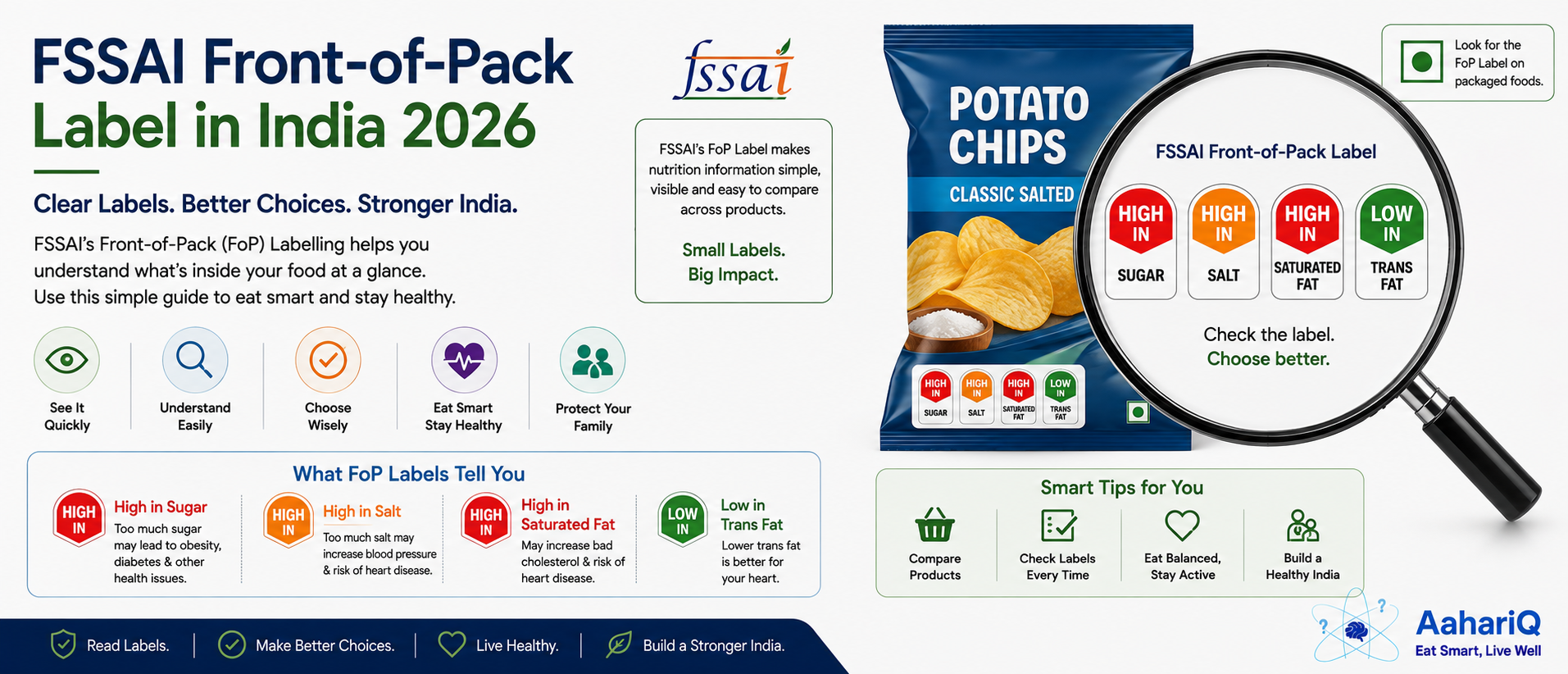 📋
📋FSSAI Front-of-Pack Warning Labels: What's Coming in 2026
 🏷️
🏷️