We use strictly necessary cookies to run AaharIQ, and optional functional/analytics cookies to improve it. You can accept all, reject non-essential ones, or . See our Cookie Policy for details.

Keto Diet & Indian Packaged Foods 2026: Keto-Washing Guide

Most 'keto' Indian snacks still contain maltodextrin or tapioca starch that can break ketosis. Here's how to spot real keto-safe packaged foods.
The Ketogenic Diet Explained: What It Actually Requires
The ketogenic (keto) diet is a very high-fat, very low-carbohydrate dietary pattern designed to shift the body's primary fuel source from glucose to ketone bodies (produced from fat breakdown in the liver). True ketosis — the metabolic state the diet targets — requires keeping net carbohydrate intake (total carbohydrates minus fibre) below approximately 20–50g per day for most adults. To achieve this, carbohydrates must constitute less than 5–10% of total calories (vs the typical 50–60% in a standard Indian diet), with fat making up 65–75% and protein 20–25%.
The keto diet has established clinical evidence for therapeutic use in: drug-resistant epilepsy (the most evidence-based indication, with decades of clinical use in paediatric neurology), Type 2 diabetes and obesity management (significant short-term weight loss and blood glucose improvement in multiple RCTs), and is being investigated for neurological conditions, PCOS, and cancer metabolic support. However, it is a highly restrictive diet that requires careful management — particularly for its effects on lipid profiles (can raise LDL in some individuals, though often with shift to larger, less atherogenic particles), kidney stone risk (increased with high protein and ketone excretion), and micronutrient adequacy (restrictive food choices can lead to deficiencies in magnesium, potassium, vitamins).
India's 'Keto' Packaged Food Market: A Regulatory Grey Zone
FSSAI has not established specific regulatory standards or criteria for 'keto' food claims. Unlike claims such as 'low fat', 'low sugar', or 'high protein' — for which FSSAI's Food Safety and Standards (Labelling and Display) Regulations 2022 specify minimum criteria — the term 'keto' can be applied to any product without meeting any specific carbohydrate or fat threshold. This regulatory vacuum enables 'keto-washing' — marketing products as keto-friendly when they do not genuinely support ketosis.
India's keto packaged food market has grown rapidly since 2018, with a proliferation of: keto cookies and biscuits, keto chocolate and snack bars, keto chips (using almond flour or coconut flour instead of maida), keto meal kits, keto bread mixes, and keto protein supplements. These products range from genuinely low-carb formulations that could fit into a ketogenic diet to products that are merely lower-carb than their conventional counterparts but still too high in net carbs to maintain ketosis.
How to Identify Genuine Keto-Compatible Products vs Keto-Washed Products
For a packaged food to genuinely support ketosis, the net carbohydrate content (total carbohydrates minus dietary fibre) must be compatible with a daily net carb budget of 20–50g. A snack or meal product should ideally provide under 5g net carbs per serving to meaningfully fit into a ketogenic diet. Here is how to evaluate Indian packaged products claiming to be 'keto':
Red flags indicating keto-washing: Net carbs above 10g per serving — this is too high for most keto practitioners. Use of maltitol as the primary sweetener — maltitol is a sugar alcohol, but it has a relatively high glycaemic index (~52) and can raise blood sugar enough to disrupt ketosis; it contributes partial net carbs. Dates, honey, jaggery, or coconut sugar as ingredients — these are marketing as 'natural' sweeteners but are high in carbohydrates and completely incompatible with ketosis. Large quantities of dextrose or glucose in 'keto' sports nutrition products. Genuinely keto-compatible features: Net carbs <5g per serving. Sweeteners: stevia, erythritol (lowest impact on blood glucose of sugar alcohols), or monk fruit. High fat from coconut oil, MCT oil, butter, cheese, or nuts. Primary flour from almond flour, coconut flour, or sunflower seed flour. Protein sources: eggs, cheese, whey isolate, nuts. Best genuinely keto-compatible packaged options in India: Plain nuts (almonds, macadamia, pecans). Hard cheese (paneer variants, processed cheese without additives). Packaged coconut oil or MCT oil. Unflavoured whey isolate. Packaged seeds (chia, flax, sunflower). Pure cocoa powder (unsweetened). Plain stevia sweeteners. Packaged olives (if available).
AaharIQ's quick-reference comparison for evaluating 'keto' packaged products in India:
| Indicator | Keto-Washing Red Flag | Genuinely Keto-Compatible |
|---|---|---|
| Net carbs per serving | Above 10g | Under 5g |
| Sweetener | Maltitol, dates, honey, jaggery, coconut sugar, dextrose/glucose | Stevia, erythritol, monk fruit |
| Fat source | Not emphasised / low fat | Coconut oil, MCT oil, butter, cheese, nuts |
| Flour base | Refined flour-based | Almond flour, coconut flour, sunflower seed flour |
| Protein source | Not specified | Eggs, cheese, whey isolate, nuts |
Traditional Indian Foods That Are Naturally Keto-Compatible
Despite the perception that Indian cuisine is carbohydrate-heavy (largely true for the staple rice and roti-based diet), India has a rich tradition of high-fat, low-carb foods that are naturally keto-compatible and far superior to packaged keto products:
Pure ghee: 100% saturated fat, zero carbohydrates. The keto diet's ideal cooking fat. Traditional, affordable, and widely available. Paneer: Full-fat paneer is high fat, high protein, and low carb (~1–2g carb per 100g). One of India's best naturally keto foods. Palak paneer, paneer tikka, and bhurji are excellent keto meals. Coconut: Fresh coconut (grated coconut used in South Indian cuisine), coconut cream, and coconut oil are traditional Indian fat sources that fit perfectly into keto. Eggs: Zero carb, high fat and protein. India produces abundant eggs at low cost. Mustard fish curry, prawn curry (without potato): High protein, fat from curry base, zero carbohydrates from the core ingredients. Traditional coastal Indian cuisine is naturally keto-compatible when rice is removed. Raita (full-fat dahi with cucumber): Low carb, probiotic, good fat. A keto-friendly accompaniment. Dry roasted seeds: Flaxseeds, sunflower seeds, chia seeds — available loose in Indian grocery stores at low cost, far superior to packaged keto snack bars at 5–10x the price.
AaharIQ's Keto Scanner Mode: How It Works
AaharIQ has developed a dedicated Keto Scanner mode that evaluates packaged products specifically for ketogenic diet compatibility. The scanner analyses:
Net carbohydrates per serving (total carbs minus fibre).
Net carbs from sugar alcohols
applies the appropriate correction factor for each sugar alcohol (erythritol: 0% net carb contribution; maltitol: 50% net carb contribution; sorbitol: 50%; xylitol: 40%).
Sweetener type assessment
identifies keto-incompatible sweeteners (maltitol, regular sugar, HFCS, dates, honey).
Fat and protein macro ratio
calculates whether the macronutrient ratio is keto-compatible (<10% calories from carbs, >60% from fat).
'Keto-washing' flag
products that claim 'keto' on packaging but have net carbs above 5g per serving receive an AaharIQ keto-washing flag.
By scanning products before purchase, keto practitioners in India can avoid expensive keto-labelled products that would actually disrupt ketosis, and identify genuinely compatible options from the standard Indian market at far lower cost.
References
- [1]Paoli A et al. (2013). Beyond weight loss: a review of the therapeutic uses of very-low-carbohydrate (ketogenic) diets. European Journal of Clinical Nutrition.
- [2]FSSAI (2022). Food Safety and Standards (Labelling and Display) Regulations 2022 — nutritional claims. FSSAI.
- [3]Harvey CJ et al. (2019). The effect of medium chain triglycerides on time to nutritional ketosis and symptoms of keto-induction in healthy adults. Journal of Nutrition and Metabolism.
Frequently Asked Questions
Genuinely keto-compatible Indian packaged foods: cold-pressed coconut oil, ghee, paneer, plain nuts and seeds (almonds, walnuts, sunflower seeds — no added flavouring or coating), unsweetened 90%+ dark chocolate, pure almond or coconut flour, and plain full-fat dahi. Always check total carbs — under 5g per serving for strict keto.
Without AaharIQ — you're scanning labels with your naked eye, missing hidden additives, E-numbers, and FSSAI violations that could silently harm your health over time.
🔍 Scan your food to check for hidden carbs and maltodextrin instantly
India's free AI food scanner. Detect harmful additives, FSSAI violations & allergens in any packaged food. Get a BUY or AVOID verdict in seconds.
Free tools related to this article
Author
Tags
Related Articles
 ❤️
❤️Heart Healthy Packaged Food India 2026 — What to Buy, What to Avoid & How to Check
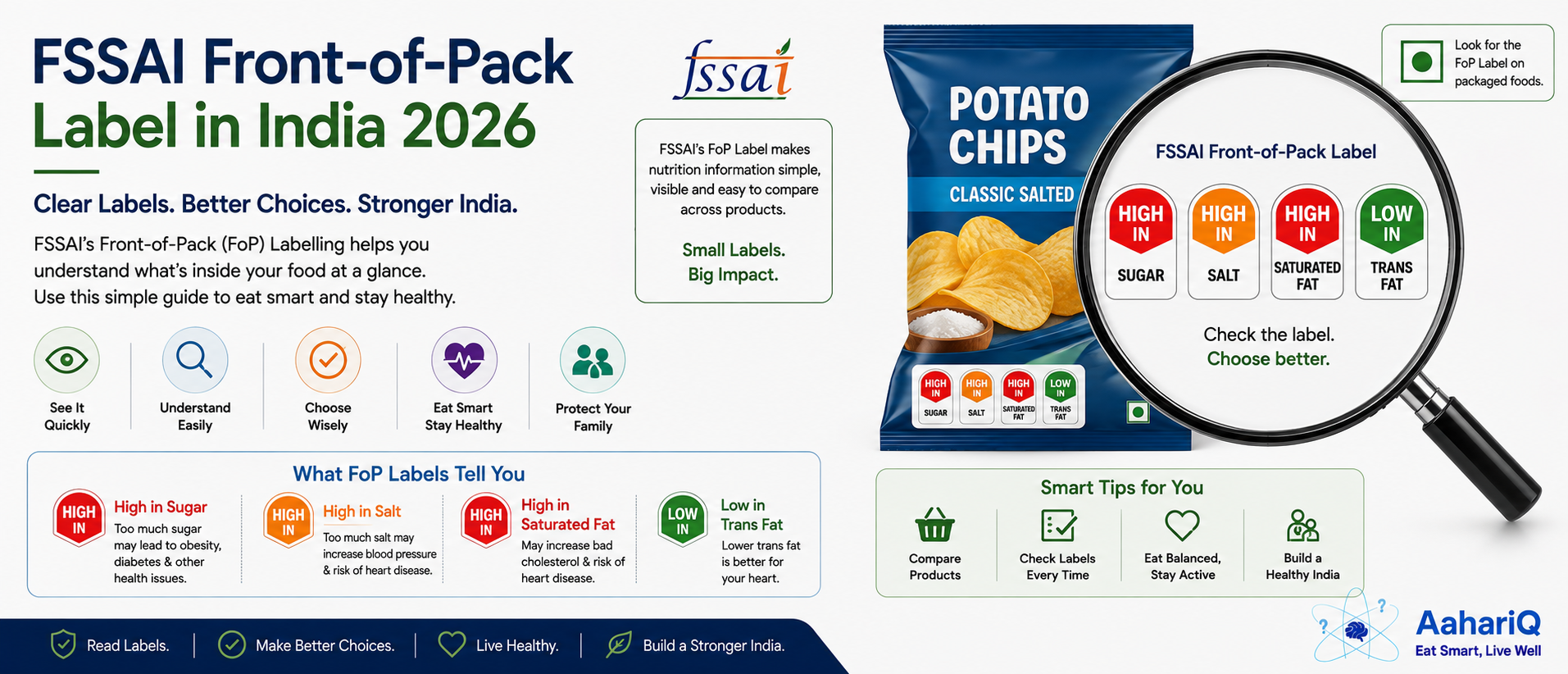 📋
📋FSSAI Front-of-Pack Warning Labels: What's Coming in 2026
 🌾
🌾Your Gluten-Free Poha Might Still Contain Wheat
 ✧
✧The Future of Precision Health: AI, Genomics, and Nutrition Converging
 🦋
🦋