We use strictly necessary cookies to run AaharIQ, and optional functional/analytics cookies to improve it. You can accept all, reject non-essential ones, or . See our Cookie Policy for details.

Food-Linked Cancer Risk in India: What to Know

IARC-classified carcinogens, ethylene oxide contamination, and EU-flagged Indian products — a data-based look at diet-related cancer risk in India.
Schema Type: MedicalWebPage + FAQPage
India has one of the world's highest per-capita incidences of cancers linked to diet and food contamination, including gastrointestinal cancers, oral cancers (linked to tobacco but also dietary patterns), and colorectal cancers (rising 12–15% annually in urban India). The International Agency for Research on Cancer (IARC), the World Health Organization's cancer research arm, has classified multiple food ingredients and processing methods used widely in India as carcinogenic or probably carcinogenic.
A 2020–2024 European Union food safety alert data showed that 527 Indian food products were flagged for contamination or safety concerns — including 312 cases involving ethylene oxide (an IARC Group 1 carcinogen — definitively causes cancer in humans) and 89 involving pesticide residue violations. These alerts affect products sold within India as well, as they are drawn from the same supply chains.
IARC Cancer Classification for Food-Related Compounds
| IARC Group | Classification | Meaning | Food-Related Examples |
|---|---|---|---|
| Group 1 | Carcinogenic to humans | Definitive human cancer evidence | Ethylene oxide, aflatoxin, processed meat, alcohol, acrylamide |
| Group 2A | Probably carcinogenic | Limited human + sufficient animal evidence | Red meat, high-temperature frying, glyphosate |
| Group 2B | Possibly carcinogenic | Limited evidence in humans | Titanium dioxide (food colouring), aloe vera extract, pickled vegetables (traditional) |
| Group 3 | Not classifiable | Insufficient evidence | Many food additives with insufficient data |
EU-Flagged Indian Food Products: The Ethylene Oxide Crisis
Ethylene oxide is a chemical sterilant widely used in India's spice processing industry to kill bacteria and increase shelf life. It is classified as an IARC Group 1 carcinogen — the highest risk category, shared with asbestos and benzene. The EU's RASFF (Rapid Alert System for Food and Feed) identified 312 Indian food products with ethylene oxide residues between 2020 and 2024.
| Year | EU RASFF Indian Alerts | Primary Issue | Products Affected |
|---|---|---|---|
| 2020 | 78 alerts | Ethylene oxide in sesame seeds | Sesame seeds, sesame oil products |
| 2021 | 104 alerts | Ethylene oxide in spices | Cumin, coriander, chilli powder, turmeric |
| 2022 | 89 alerts | Ethylene oxide + pesticide residues | Mixed spices, frozen foods, rice products |
| 2023 | 71 alerts | Pesticide residue violations | Frozen vegetables, fresh produce, tea |
| 2024 (to Nov) | 52 alerts | Ethylene oxide + microbiological | Spice mixes, ready meals, dal products |
| Total 2020–2024 | 394 alerts (inc. 312 EtO) | Ethylene oxide dominant | Spices, seeds, processed foods |
Processed Meat and Colorectal Cancer: The Indian Risk
In 2015, the IARC classified processed meat as Group 1 carcinogenic to humans, based on sufficient evidence that consumption of processed meat causes colorectal cancer. This includes all products cured with nitrate/nitrite preservatives: sausages, frankfurters, ham, salami, packaged deli meats, and bacon.
India's processed meat market has grown at 12.3% annually since 2015, driven by urbanisation and changing dietary preferences. FSSAI data shows that India now has over 2,000 registered processed meat manufacturers, producing products that frequently contain sodium nitrate (E251) and sodium nitrite (E250) — the specific compounds through which processed meat causes colorectal cancer.
A 50g daily serving of processed meat increases colorectal cancer risk by 18% (IARC meta-analysis). For the 50–80 million urban Indians who now consume processed meat regularly, this translates to a meaningful population-level increase in colorectal cancer risk.
Acrylamide: The Cancer Risk in Indian Chai, Roti, and Chips
Acrylamide is an IARC Group 2A (probably carcinogenic) chemical that forms naturally when starchy foods are cooked at high temperatures — above 120°C. Baking, frying, and toasting all produce acrylamide. In the Indian diet, the primary acrylamide sources are deep-fried snacks (chips, pakoras, puri), roasted coffee, packaged biscuits baked at high temperatures, and toast.
| Food | Acrylamide Level (μg/kg) | Risk Level | Risk Reduction Strategy |
|---|---|---|---|
| Potato chips (packaged) | 1,200–2,400 | ❌ High | Avoid or minimise |
| French fries | 300–2,300 | ❌ High (variable) | Avoid or minimise |
| Packaged biscuits/crackers | 150–800 | ⚠️ Moderate | Limit to occasional |
| Toast (heavily browned) | 100–500 | ⚠️ Moderate | Toast lightly — not dark |
| Coffee (brewed) | 45–200 | ⚠️ Low-moderate | Moderate daily consumption safe |
| Roti/bread (not browned) | <50 | ✅ Low | Normal home cooking safe |
| Boiled/steamed foods | <10 | ✅ Very low | Boiling produces no acrylamide |
Lightly cooked is safer than heavily browned. The golden rule for acrylamide: the darker the colour of a baked or fried food, the more acrylamide it contains. This applies equally to home cooking (avoid burning rotis) and packaged products (deep-coloured chips have higher acrylamide).
Aflatoxin: India's Invisible Carcinogen
Aflatoxin B1 — produced by Aspergillus moulds that grow on peanuts, maize, rice, and spices in humid conditions — is the most potent natural carcinogen known. It is classified IARC Group 1 and is directly linked to hepatocellular carcinoma (liver cancer). India accounts for 40% of global aflatoxin contamination incidents according to FAO data.
A 2023 FSSAI survey found aflatoxin contamination exceeding legal limits (15 μg/kg) in 12.3% of peanuts, 8.7% of maize products, and 6.4% of chilli samples tested across India. Traditional storage methods (damp gunny bags, inadequately sealed containers) in humid regions are primary contamination points.
How AaharIQ Protects Indian Consumers from Food Cancer Risks
AaharIQ's food safety analysis flags: all nitrate/nitrite preservatives (E249, E250, E251, E252) in processed meat and other products, artificial food colours with carcinogenic concern (specifically sunset yellow E110 and tartrazine E102 which have EU restrictions), BHA (E320) and BHT (E321) — antioxidants that are IARC Group 2B and 3 respectively — and known contaminant-prone ingredients (peanuts, raw spices, maize) in products from supply chains with documented safety issues.
AaharIQ also maintains a database of FSSAI enforcement actions and EU RASFF alerts for Indian food products, flagging products or brands with a documented safety history — an intelligence layer unavailable in any other Indian food scanner.
India's food safety problem is invisible — you cannot taste ethylene oxide in your cumin or see aflatoxin on your peanuts. AaharIQ doesn't just read the label — it cross-references safety databases to give you the complete risk picture.
Frequently Asked Questions
Q: Which Indian spices have been flagged for ethylene oxide?
EU RASFF alerts have identified ethylene oxide residues in cumin (jeera), coriander (dhania), chilli powder, turmeric, sesame seeds, mixed curry powder, and garam masala from Indian producers. The most affected products come from supply chains where ethylene oxide fumigation is used as a sterilisation method instead of steam sterilisation (which does not leave harmful residues). Buying whole spices and grinding at home significantly reduces ethylene oxide exposure.
Q: Is red meat safe in India?
Unprocessed red meat is classified IARC Group 2A (probably carcinogenic) — a lower risk category than processed meat. Moderate consumption of unprocessed goat meat (mutton) — the predominant red meat in the Indian diet — carries a lower documented cancer risk than processed meats. Avoiding charred/heavily grilled meat and limiting to 2–3 servings per week is a reasonable approach.
Q: Do artificial food colours cause cancer?
Several artificial colours used in Indian food have varying evidence for carcinogenicity. Sunset Yellow (E110) and Tartrazine (E102), common in orange and yellow Indian snacks and drinks, are restricted in the EU but permitted in India. They are not definitively classified as carcinogens (they are IARC Group 3) but have associated concerns with allergic reactions and possible genotoxicity in high doses. Red 40 (Allura Red, E129) is similarly under scrutiny. Until more definitive data exists, minimising consumption of artificially coloured packaged foods is prudent.
Frequently Asked Questions
EU RASFF alerts have identified ethylene oxide residues in cumin (jeera), coriander (dhania), turmeric (haldi), pepper, and spice blends from multiple major Indian brands. Ethylene oxide is classified as a Group 1 carcinogen by IARC. The contamination typically occurs during fumigation of spices for export, and FSSAI has issued guidelines in response.
Without AaharIQ — you're scanning labels with your naked eye, missing hidden additives, E-numbers, and FSSAI violations that could silently harm your health over time.
🔍 Scan your food to check for food cancer risk india instantly
India's free AI food scanner. Detect harmful additives, FSSAI violations & allergens in any packaged food. Get a BUY or AVOID verdict in seconds.
Free tools related to this article
Author
Tags
Related Articles
Is Haldiram's Bhujiya Harmful? Nutritionist Breakdown of India's Favourite Namkeen
 ●
●How Your Gut Microbiome Shapes Your Response to Food Ingredients
 🦋
🦋Thyroid Patients: Which Packaged Foods to Avoid?
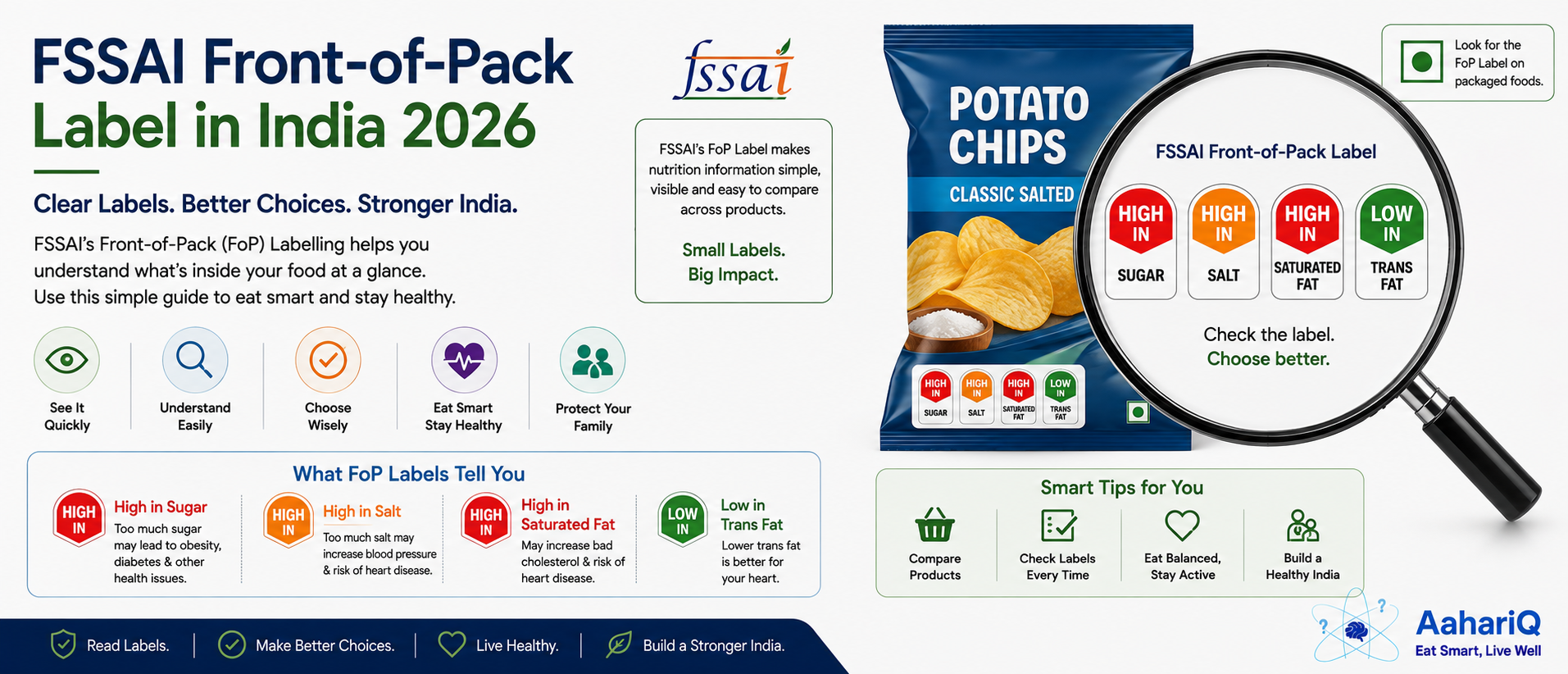 📋
📋FSSAI Front-of-Pack Warning Labels: What's Coming in 2026
 ▲
▲